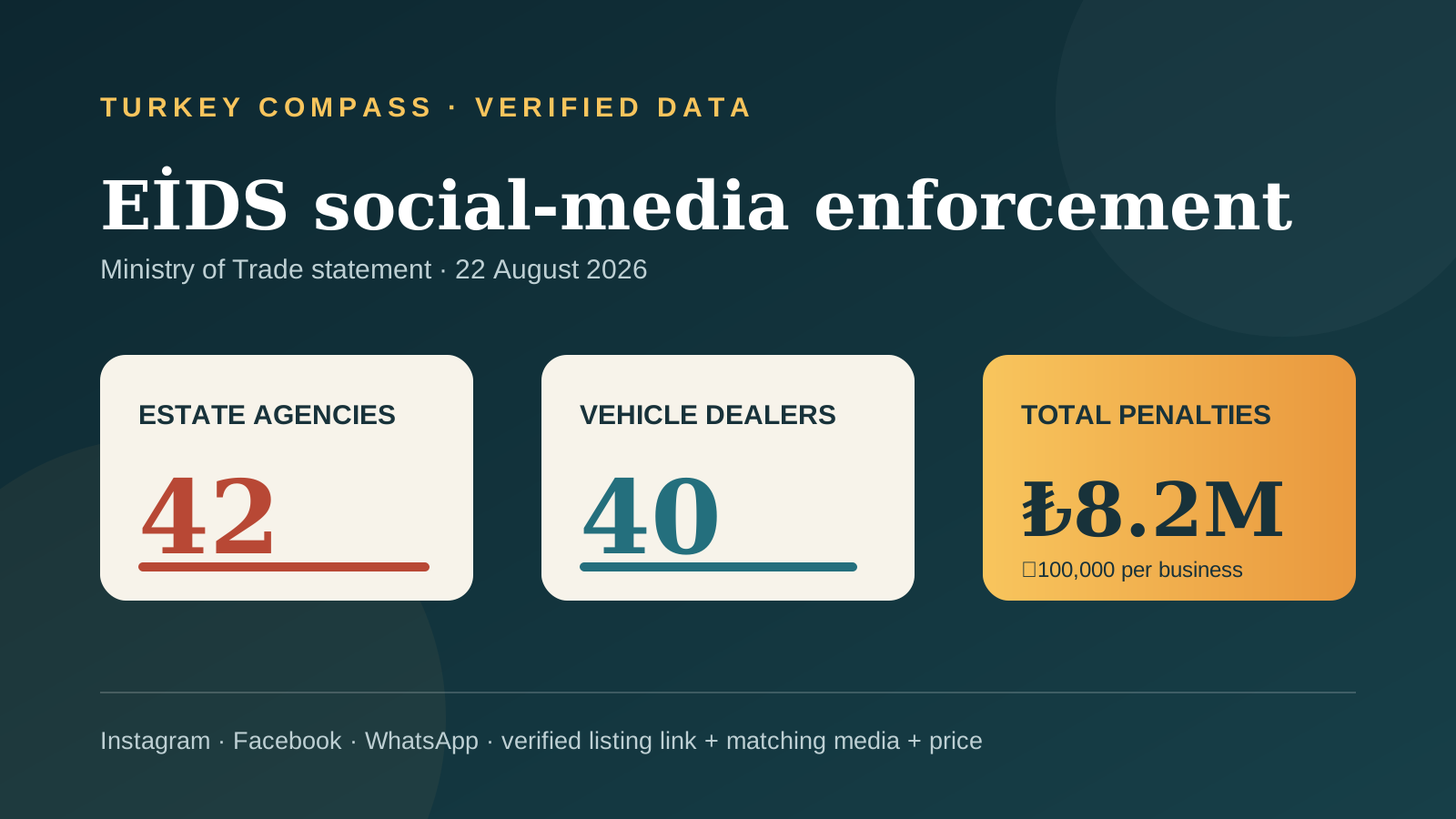
Turkey's Trade Ministry has moved from warning businesses about social-media listings to penalising them. In a statement dated 22 August 2026, the ministry said it fined 42 real-estate businesses and 40 vehicle dealers TRY 100,000 each for non-compliant advertisements, a total of TRY 8.2 million. It also said the relevant Meta accounts would be blocked. For international buyers, the practical point is broader than the penalty figure: a polished Instagram post, Facebook advert or WhatsApp message is not a substitute for an EİDS-verified property listing and proof that the advertiser is authorised.
What the ministry confirmed
The enforcement covered 82 businesses in total, split between 42 estate agencies and 40 vehicle dealers. Each business received a TRY 100,000 administrative fine, producing the announced TRY 8.2 million total. The ministry said the affected accounts would also be blocked by Meta. The statement does not publish the names of the businesses or identify individual property listings, so readers should not infer that a particular agency was fined unless an official record specifically says so.
EİDS also applies to social media
The Electronic Listing Verification System, known by its Turkish abbreviation EİDS, is intended to verify identity and authority in online property and vehicle advertising. The ministry expressly says the obligation extends beyond conventional listing portals to electronic advertisements on Instagram, Facebook and WhatsApp. Moving an offer into a direct message, story, group or business account therefore does not place it outside the verification framework. The medium changes; the advertiser's responsibility does not.
What a compliant property post should contain
According to the ministry's explanation, a social-media property post should include the link to the listing that has completed EİDS verification. Photographs, videos and descriptions may accompany that link only when they concern the same verified property. The ministry also says the listing price must appear. A post that uses attractive images but omits the verified link or mixes media from another apartment deserves extra scrutiny, even if the account has many followers or presents itself as an established brand.
What EİDS verification does — and does not — prove
EİDS helps establish who is advertising and whether the person or business has authority to market the property. That is an important anti-fraud control, but it is not a complete legal or technical audit of the home. Verification does not by itself prove clean title, correct zoning, an occupancy permit, earthquake performance, the absence of debt or restrictions, or a fair price. Buyers still need parcel-specific due diligence and should never treat an EİDS link as a government guarantee of investment quality.
A safer workflow for an overseas buyer
Open the verified listing through the link supplied in the post and confirm that its address area, property type, photographs, price and agency details match the social-media offer. Preserve screenshots and the listing reference. Before paying a reservation fee or deposit, obtain the title information and seller authority through independent channels, check the contract in a language you understand and verify the beneficiary bank account. A request to pay urgently because a social-media promotion is expiring is not evidence that the transaction is safe.
Why WhatsApp deserves the same caution
WhatsApp is often where an initial enquiry becomes a negotiation, particularly for foreign buyers. The ministry's statement makes clear that the rules are not limited to public feeds. A salesperson may send additional photographs, video calls or location details, but the underlying advertised property should still connect to the verified listing. If the price, unit number or images change during the conversation, ask for an updated verified record rather than accepting an informal explanation in chat.
What agents and developers should review now
Businesses should audit posts, stories, catalogues, paid campaigns and messaging templates across all staff accounts. Each promoted home should lead to the correct EİDS-verified listing, display the price and use only media belonging to that property. Old posts may need removal or correction when the property, price or authority has changed. Internal approval logs and staff training are sensible because a personal-looking account can still function as a commercial advertising channel.
Turkey Compass assessment
The new fact is enforcement, not a newly invented rule: the ministry has announced penalties against individual property and vehicle businesses after earlier warnings about social-media advertising. Buyers should use this as a verification prompt, not as a reason to distrust every online offer. Agencies that provide the EİDS link, consistent property details and a traceable legal process make comparison easier. If any of those elements is missing, pause before sharing documents or money and request independent confirmation.