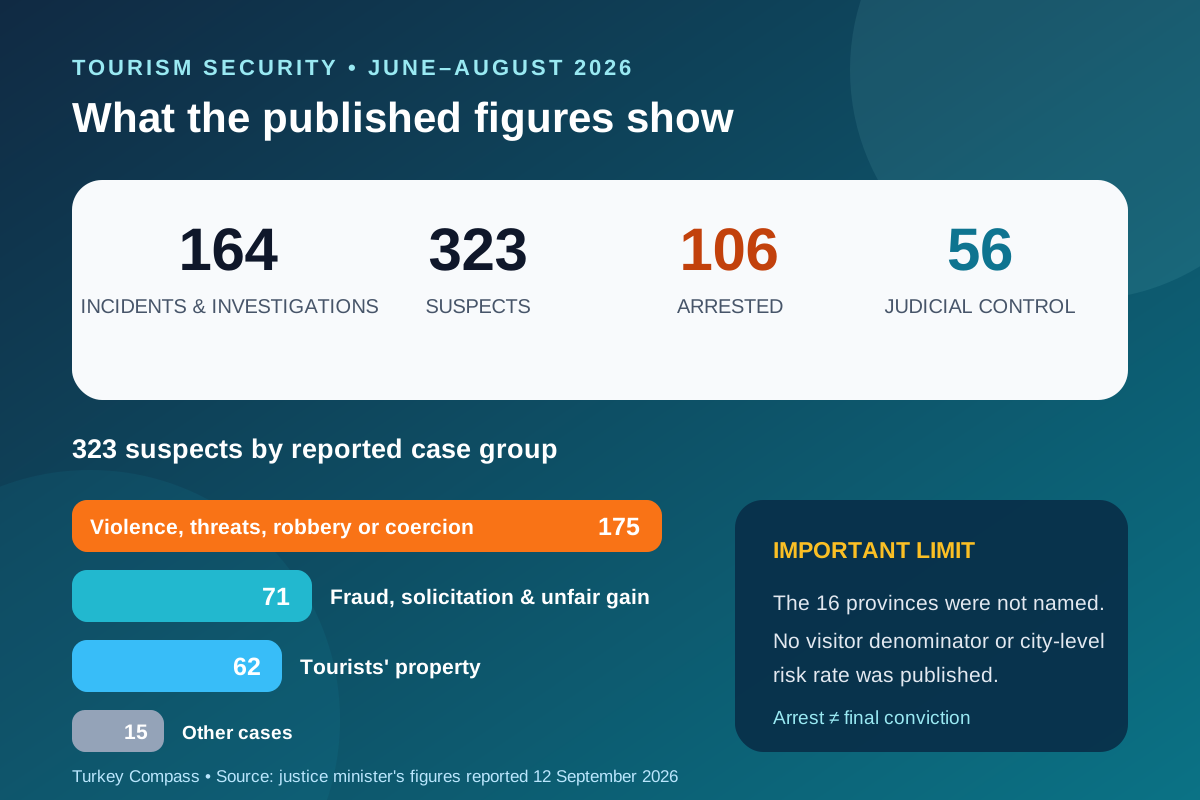
Turkey's justice minister reported on 12 September that prosecutors, police and gendarmerie handled 164 tourism-security incidents and investigations across 16 provinces during June, July and August 2026. Judicial action was taken against 323 suspects; 106 were arrested pending proceedings and 56 were placed under judicial-control measures. For international visitors, the figures document enforcement activity. They are not a nationwide travel warning, a crime rate or proof that every resort faces the same conditions.
The reported totals
The statement covers three summer months and four broad groups. It says 71 suspects faced action over tourism fraud, aggressive solicitation known locally as hanutçuluk and unfair commercial gain; 175 over violence, threats, robbery or coercion; 62 over offences targeting tourists' property; and 15 over discrimination, privacy, freedom of belief, public order or other tourism-security matters. Those four figures add to the reported 323 suspects.
Arrest is not the same as conviction
The minister reported 20 arrests in the fraud and solicitation group, 43 in the violence group, 40 in the property-crime group and three in the remaining group, for a total of 106. An arrest is a judicial precaution while a case proceeds; it is not a final finding of guilt. The release does not provide conviction numbers, case outcomes or compensation figures.
What the data cannot tell a traveller
The 16 provinces were not named, and the statement gives no city-by-city distribution, number of visitors, complaint rate or comparison with 2025. It therefore cannot support a ranking of Antalya, Istanbul, Muğla or any other destination. It also announces no beach, hotel, road, airport or district closure and does not change entry or residence rules.
A practical response to fraud or pressure
Keep the booking, advertisement, receipt, card slip and messages. Confirm the legal name of the hotel, tour operator, shop or transport provider before paying, and avoid sending money to an unrelated personal account. If a seller uses pressure, changes the promised service or refuses documentation, stop the transaction and preserve the evidence rather than relying on a verbal explanation.
When immediate help is needed
Turkey uses the single 112 emergency number for police, gendarmerie, ambulance, fire and other urgent assistance. Share the exact location, nature of the danger and a callback number. Commercial disputes that are not emergencies follow separate complaint or legal channels; 112 should not be treated as a general booking-refund service.
Turkey Compass assessment
The meaningful news is that the government published a cross-agency summer enforcement balance focused on visitors and tourism areas. The responsible reading is narrower than a safety slogan: 323 suspects and 106 arrests describe investigated conduct, while the missing province list and visitor denominator prevent conclusions about the relative safety of a particular destination. Travellers should use the report as a prompt for documented payments and prompt reporting—not as evidence of a blanket crisis.
Antalya Governor's Office — official 112 emergency-call information →