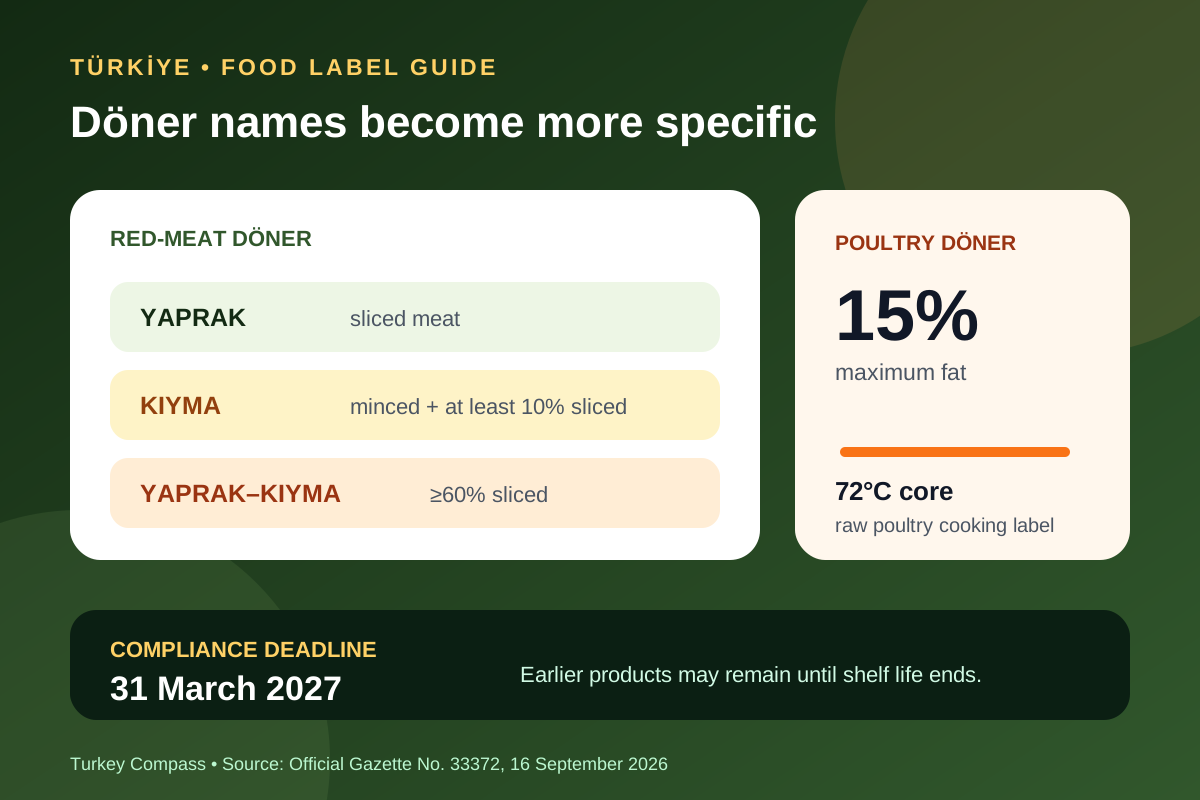
Türkiye published a replacement food-codex communiqué for meat products on 16 September 2026. The rules matter to residents and visitors because döner names must distinguish how the meat is prepared, poultry products face tighter composition standards and several disclosures become more prominent. The communiqué is in force, but most shoppers should expect a transition rather than an overnight shelf change: businesses operating before publication have until 31 March 2027 to comply, and earlier products may remain until their shelf life ends.
Three red-meat döner descriptions
Red-meat döner is defined as yaprak (leaf), kıyma (minced) or yaprak-kıyma (mixed), and the relevant description must appear in the product name in the same colour and typeface. Minced döner may contain at most 90% mince and at least 10% sliced raw red meat. Mixed döner must contain at least 60% sliced raw red meat and at most 40% mince. The wording helps shoppers compare products; it does not grade restaurant quality or taste.
Composition limits behind the label
Red-meat döner may contain at most 25% fat and 2% salt, with at least 12% total meat protein. Pistachio and cheese cannot be used in döner, and dietary fibre cannot be an ingredient in leaf döner. Except for milk, yogurt, egg and proteins derived from them, the communiqué restricts added protein sources, starch fillers and soy products; starch and plant protein coming from spices together may not exceed 1%.
Poultry products get separate rules
Poultry döner is capped at 15% fat and 2% salt and must contain at least 14% total meat protein; heat-treated poultry döner must reach at least 18%. Poultry mince and mixtures made with it may be sold only frozen. Labels on raw poultry, poultry mince and prepared poultry mixtures must tell consumers that the core temperature should reach at least 72°C during cooking. This is a cooking instruction, not proof that a ready-to-eat item was handled correctly.
Other disclosures to look for
If head meat is used in an emulsified meat product, the label must say ‘Baş eti içerir’ (contains head meat). Mechanically separated poultry must also be declared, the animal source of added fat must be identified, and pastırma sold after its çemen coating is removed must say so. Claims such as ‘100%’, ‘100% beef’ or ‘100% breast meat’ cannot appear on products covered by the communiqué, including in brands or logos.
Why labels will not all change immediately
The text entered into force on 16 September 2026, but operators already active on that date have until 31 March 2027 to meet the new provisions. Non-compliant products placed on the market before that deadline may remain until the end of their shelf life. A familiar package after publication therefore does not by itself prove a violation; check the production date, shelf life and transition rule.
A practical check for residents and travellers
At retail, read the Turkish product name, ingredient list, storage condition, use-by date and cooking instruction together. In restaurants, the packaged-product label rules do not replace basic food-safety checks: choose a reputable operator, look for proper hot or cold holding and avoid treating a marketing phrase as a laboratory result. For allergies or religious and dietary requirements, ask for the ingredient and production information rather than relying on the word döner alone.
Çanakkale Kalem — consumer summary of the meat and milk rules, 16 September 2026 →