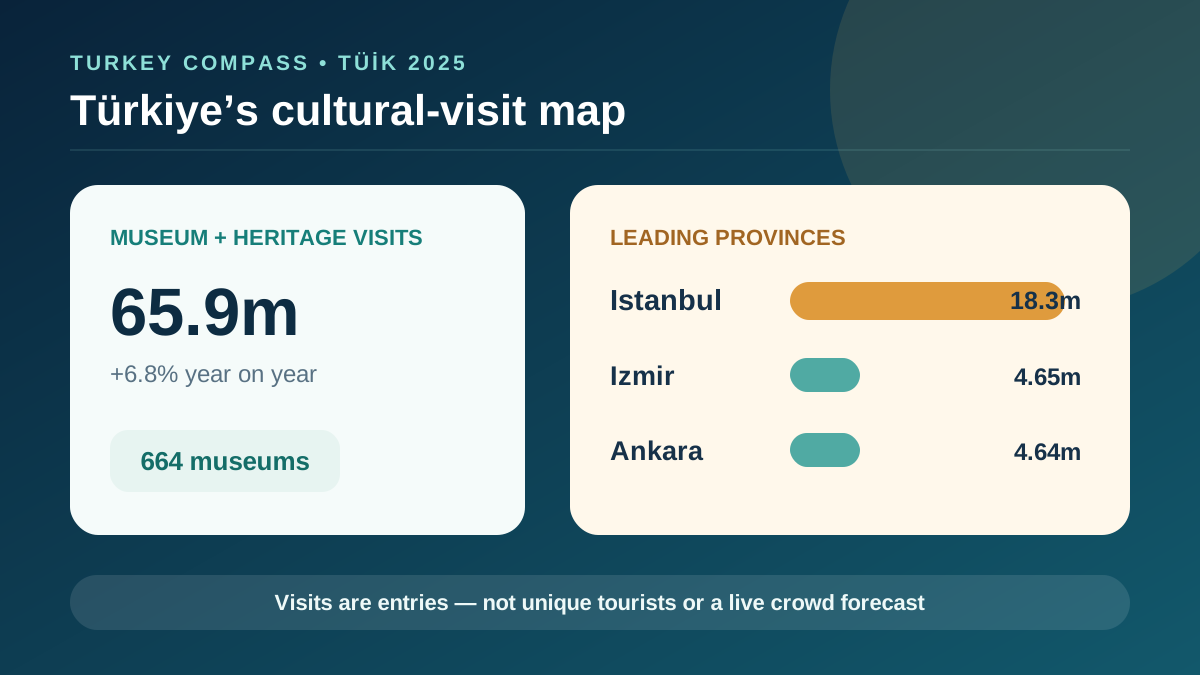
Turkey's museums and archaeological sites recorded 65,862,639 visits in 2025, up 6.8% from the previous year, TÜİK reported on 7 September 2026. Istanbul accounted for 18,307,485 visits; Izmir and Ankara each exceeded 4.6 million. For international travellers, the figures confirm that cultural attractions are a major part of Turkey's visitor economy and identify where demand is concentrated. They do not show how busy a particular entrance will be next Tuesday. The dataset counts visits rather than unique people, combines different types of institution and covers the whole of 2025. Current hours, ticket rules and temporary closures still require a separate check.
65.9 million is a visit count, not 65.9 million different tourists
One resident or traveller can enter several museums, revisit a site or use a museum card multiple times. Each admission can contribute to the total, while the release does not identify nationality, overnight stay, purpose of travel or a unique-person count. The 6.8% annual increase therefore measures activity at museums and archaeological sites. It should not be presented as proof that 65.9 million foreign tourists visited Turkey or that cultural tourism alone grew by the same percentage.
Istanbul leads, while Izmir and Ankara form a second tier
TÜİK reports 18,307,485 museum visits in Istanbul, 4,646,357 in Izmir and 4,642,683 in Ankara. Istanbul's total is almost four times either of the next two cities, reflecting a dense mix of palaces, national collections, private museums and historic monuments. The ranking is useful for route planning and for operators assessing cultural demand, but it is an annual provincial total. It does not rank individual venues or reveal the busiest hour, month or ticket queue.
Turkey had 664 museums and 148 archaeological sites in the dataset
The museum count rose 4.4% to 664: 220 operated under the Ministry of Culture and Tourism, 426 were classified as private museums and 18 belonged to the Presidency of National Palaces. The number of archaeological sites was 148. More institutions can broaden a route beyond the best-known icons, but a statistical listing is not the same as a guarantee that every venue is open every day. Travellers should verify the exact operator, official page and current access conditions for each stop.
Operator type matters when comparing the totals
Ministry museums and archaeological sites received 52.9% of all visits. Private museums recorded 21,905,335 visits, an increase of 10.8%, while National Palaces museums recorded 9,122,685, down 8.8%. These series cover different networks and cannot by themselves explain why demand changed. Exhibitions, restoration, access hours, pricing, capacity and the mix of included institutions may all matter. A rise in one category is not evidence that every museum in it became busier.
Paid entries and museum cards answer different questions
TÜİK counted 20,888,733 visits to paid Ministry museums and archaeological sites, equal to 31.7% of the overall total. The Ministry sold 6,804,917 museum cards during the year. A card sale is not one site visit, and a paid-entry total is not total ticket revenue. Eligibility, price, validity period and included sites can change, so an international visitor should check the current official product rather than infer access from the 2025 sales number.
Use the data as a demand map, then check the live trip details
The defensible conclusion is that Turkey's cultural attractions handled more visits in 2025 and that demand was strongly concentrated in Istanbul, with Izmir and Ankara next. For an actual itinerary, check the venue's current opening and last-admission time, restoration notices, weather exposure, transport and the ticket channel. Annual statistics cannot confirm today's crowd level, a night-opening schedule or availability. Turkey Compass's current September-hours guide and site-specific reports provide the operational layer the annual release does not.