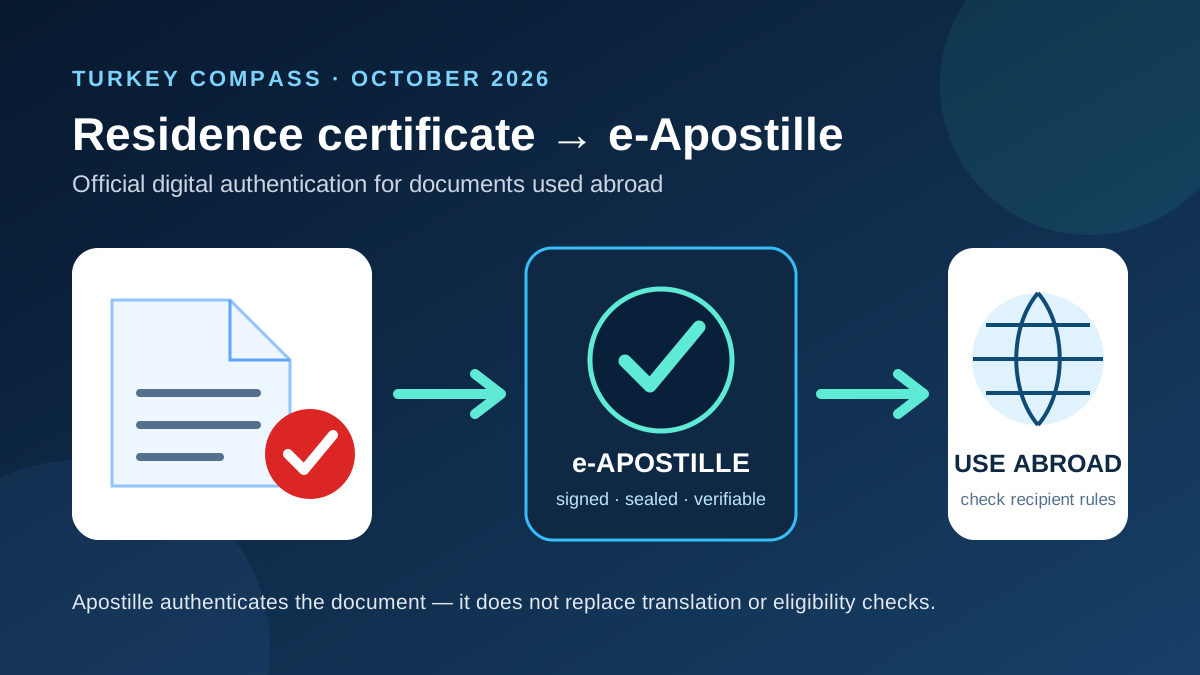
Turkey's Interior Ministry says the Yerleşim Yeri Belgesi — the official certificate showing a registered address in Turkey — was added to the e-Apostille service in October 2026. The change creates a digital route for a document often requested in cross-border education, work, family, banking and administrative files. It can remove a trip for a paper apostille when the applicant can use the authenticated PTT service, but it does not guarantee that every foreign authority will accept a printout, a Turkish-only document or an older address record.
What was added
The new item is the residence certificate issued from Turkey's address-registration records. The ministry says eligible documents receive an electronic apostille with an electronic signature and institutional seal. The apostille verifies the origin of the public document for use in another country covered by the Apostille Convention; it does not certify that the address is still current after the document was issued or that every statement in an application is correct.
The official online route
Start from turkiye.gov.tr and open the PTT e-Apostille service, or use the official eapostil.gov.tr portal. Sign in through an accepted e-Devlet method, select the residence-certificate document type when it is available for your account, identify the destination country and follow the application and payment screen shown by the service. Availability, price and delivery status should be read from the live official screen rather than from an agent or an old fee table.
A foreign resident should check access first
Foreign nationals registered in Turkey may have an e-Devlet account and a residence record, but the announcement does not promise that every account or every address situation will produce an eligible certificate. If the document type is missing, the address is outdated or the identity record does not match, use the official population directorate or PTT support route. Do not give an intermediary your e-Devlet password, SMS code, residence-card image or full passport scan to ‘unlock’ the service.
Apostille and translation solve different problems
An apostille authenticates the signature, seal and capacity behind the public document. It does not translate the residence certificate. A German university, Ukrainian authority, British bank or another recipient may still require a certified translation, a particular electronic file, a paper original or a document issued within a specified period. Ask the receiving institution what it accepts before paying or commissioning a translation.
Check the destination country's rules
The electronic apostille route is relevant when the document will be used in a country where the Apostille Convention applies. Some civil-status documents may fall under separate international agreements, while a non-Convention destination may require consular legalisation instead. The receiving authority also decides whether it accepts an electronically signed PDF, a verifiable printout or only a specific submission channel.
Practical checklist before submission
Confirm that your Turkish address registration is correct; create the certificate close to the filing date; select the correct destination country; download the complete electronically signed file without cropping its verification data; verify it through the official portal; and keep the application receipt. Then check translation, document-age and upload-format rules with the recipient. The new service changes the authentication route, not the underlying visa, residence, university or banking eligibility rules.
e-Devlet — official PTT e-Apostille service →
PTT — how Turkey's electronic apostille system works →
Official e-Apostille portal — country and verification information →