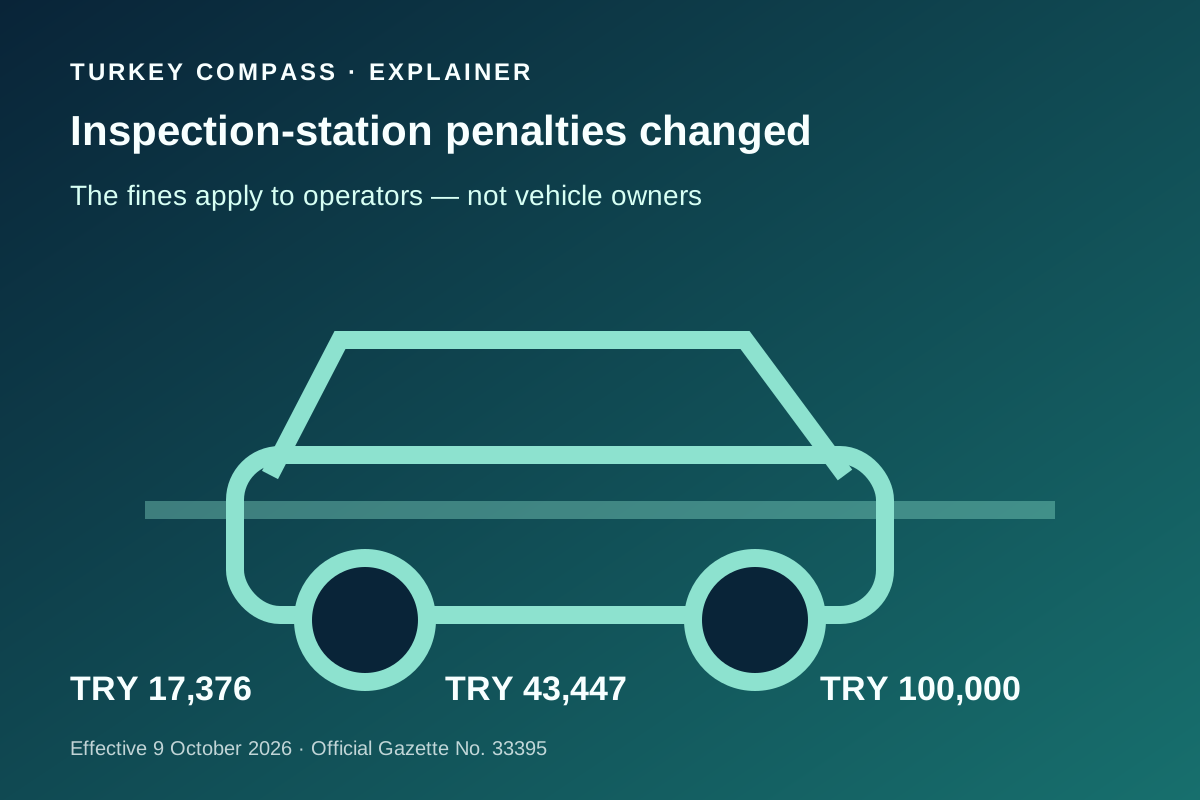
Turkey revised the enforcement provisions for authorised vehicle-inspection stations on 9 October 2026. The amendment assigns three administrative fines—TRY 17,376, TRY 43,447 and TRY 100,000—to specified breaches of operating and administrative obligations. These are penalties for station operators, not a new fine charged to a driver whose car is presented for inspection. The text took effect on publication.
Which violations carry each amount
The TRY 17,376 tier applies to selected breaches of Articles 6, 9, 11 and 15 of the station regulation. The TRY 43,447 tier covers specified breaches in Articles 6, 11, 12 and 17. The TRY 100,000 tier is reserved for listed breaches of Articles 12, 17 and 22. The amount therefore depends on the exact obligation breached; it is not a single automatic penalty for every operational error.
The inspection authority is the ministry
The amendment states that inspections are carried out by the Ministry of Transport and Infrastructure under the Road Traffic Law and the ministry's founding legislation. It also identifies a group of operating duties as administrative conditions. The change concerns how authorised stations are supervised and sanctioned, not the technical test that an individual vehicle must pass.
What did not change for a vehicle owner
The published amendment does not change periodic inspection intervals, appointment rules, test items or inspection prices. It also does not transfer the three station-level fines to drivers. Owners must still keep the vehicle's inspection valid and follow the existing appointment and reinspection rules. Any later change to fees or inspection periods would require a separate official measure.
Why the distinction matters for foreign residents
Foreign residents who own a Turkish-registered vehicle use the same authorised inspection system and may see headlines describing a 'TRY 100,000 inspection fine'. The accurate reading is narrower: the maximum listed amount targets an operator's specified non-compliance. A driver should rely on the official appointment channel and request a receipt; a service problem can be documented and reported to the competent authority.
Foreign-plated vehicles remain a separate issue
The ministry's public guidance says Turkish inspection stations operate under the Road Traffic Law and do not inspect vehicles that are not registered in Turkey. This amendment does not alter that rule. A visitor with a foreign-plated vehicle should comply with the registration and inspection requirements of the vehicle's country and the customs conditions for temporary admission to Turkey.