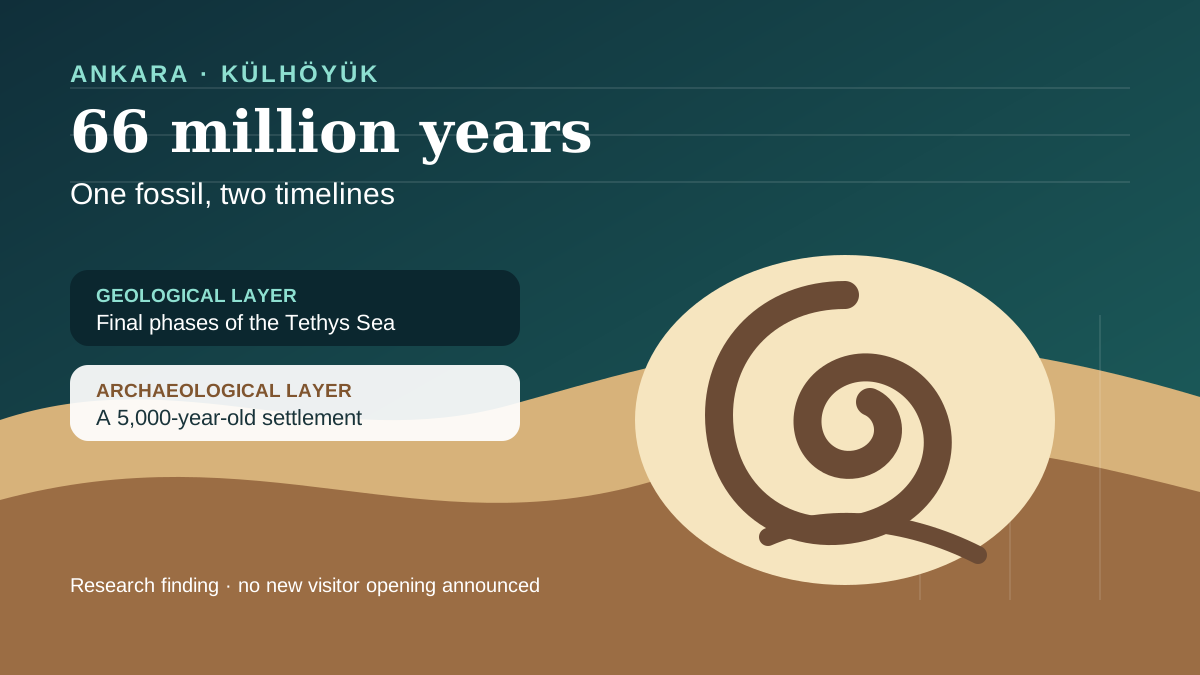
Türkiye's Ministry of Culture and Tourism announced on 14 September 2026 that excavators at Külhöyük in Ankara's Gölbaşı district had found a fossilised gastropod believed to be about 66 million years old. The object is linked to the final phases of the Tethys Sea, yet it appeared inside a settlement occupied roughly 5,000 years ago. Researchers are therefore considering whether ancient residents deliberately brought the fossil to the mound. The discovery is scientifically intriguing, but it is not an announcement of a new museum display or visitor opening.
What was actually discovered
The ministry identifies the object as the fossil of a gastropod, the animal group that includes snails. It is thought to date from around 66 million years ago, when the last stages of the Tethys Sea still shaped the natural history of Central Anatolia. The announcement reports an initial identification and interpretation; it does not publish a peer-reviewed species classification or a complete laboratory study.
Why the find spot matters
Külhöyük is a Hattian and Hittite settlement whose human occupation is measured in thousands, not tens of millions, of years. That enormous age gap means the fossil did not originate from the settlement's cultural layer in the same way as pottery or architecture. The working possibility is that people living there encountered the object elsewhere and carried it to the site, perhaps because its unusual form attracted attention. Its ancient purpose remains unknown.
What Külhöyük contributes to Ankara's history
Ankara University describes Külhöyük as a mound about 250 metres long, 150 metres wide and 22 metres high, with evidence spanning multiple periods. Excavations have operated with presidentially authorised status since 2021 under a team led by Associate Professor Derya Yılmaz Tekin. The fossil adds a natural-history question to a site already studied for Hattian and Hittite life and regional routes.
What visitors should not assume
Neither the ministry announcement nor the university overview says that the fossil is currently on public display, that a new exhibition has opened or that access to the active excavation has changed. Archaeological digs are controlled research environments. Anyone planning a trip specifically for the discovery should first check with the Ministry of Culture and Tourism, Ankara University or the relevant museum authority rather than relying on map listings or social-media posts.
Turkey Compass assessment
The real value of the story is the mismatch between the fossil's geological age and the settlement's archaeological age. It may reveal how ancient people noticed, collected or interpreted unusual natural objects, but that hypothesis still needs research. For travellers, Külhöyük should be understood as an active scientific site, not yet marketed as a newly opened fossil attraction.