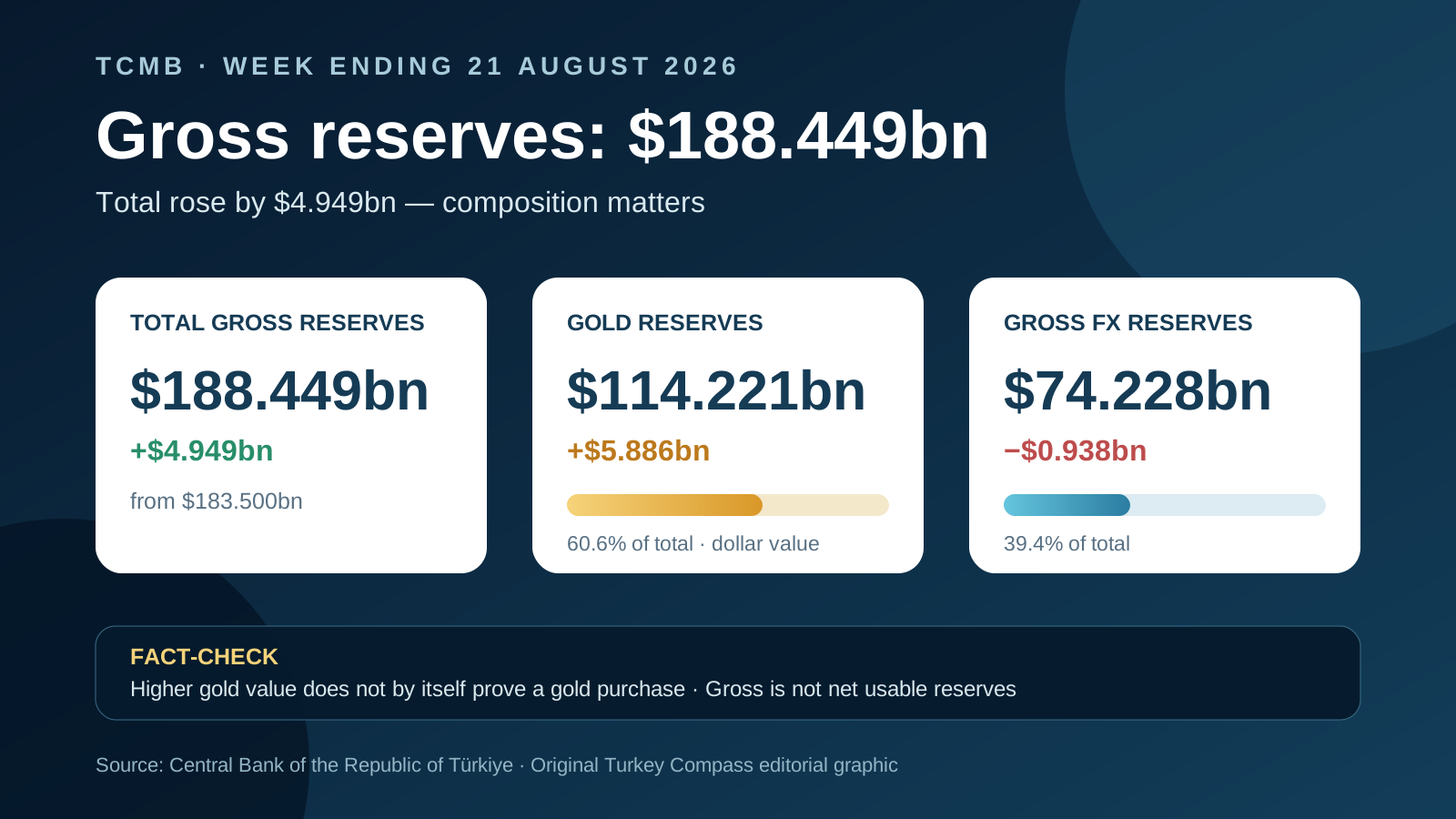
Turkey’s central bank reported $188.449 billion in total gross reserves for the week ending 21 August 2026, up $4.949 billion from a week earlier. The headline increase needs context: gross foreign-currency reserves declined by $938 million to $74.228 billion, while gold reserves rose by $5.886 billion to $114.221 billion. The figures matter to international investors, but they do not by themselves prove a currency purchase, a change in policy or an immediate effect on the lira.
The weekly figures
Total gross reserves moved from $183.500 billion to $188.449 billion. Within the total, gross foreign-currency reserves fell from $75.166 billion to $74.228 billion. Gold reserves increased from $108.334 billion to $114.221 billion. Rounded components differ from the total change by about $1 million, which is a normal rounding effect in published figures.
Why the composition is more informative than the headline
About 60.6% of the reported total was gold and 39.4% was foreign currency at the end of the week. The $4.95 billion rise therefore should not be described as an equivalent increase in liquid foreign-currency holdings. A stronger reserve headline can coexist with a fall in the FX component, as happened in this release.
A rise in gold reserves does not prove that the bank bought $5.9bn of gold
Gold reserves are reported in US-dollar terms. Their value can change because of transactions, the international gold price, exchange-rate valuation and other statistical effects. The weekly stock figures alone do not separate every driver. It would be inaccurate to infer a $5.886 billion gold purchase without transaction-level evidence.
Gross reserves are not the same as net usable reserves
The published total is a gross stock measure. It should not be presented as cash that can be spent without limits or as the central bank’s net position after all liabilities, swaps and other obligations. Analysts use additional indicators for net reserves and reserve adequacy. This release is useful for direction and composition, but it is not a complete balance-sheet diagnosis.
What international investors should watch next
A single week can be affected by valuation and settlement timing. A more reliable reading comes from several consecutive weeks, the split between gold and foreign currency, net-reserve measures, swap positions, exchange-rate volatility and monetary-policy communications. Investors should also compare reserve changes with import financing needs and short-term external liabilities rather than using the headline total alone.
Turkey Compass verdict
Accurate: Turkey’s total gross central-bank reserves rose by about $4.95 billion to $188.45 billion in the week ending 21 August. Incomplete: the central bank simply added the same amount of foreign currency. The FX component fell, while the increase was more than accounted for by the higher dollar value of gold reserves. The weekly release does not establish how much of that gold change came from purchases versus valuation.