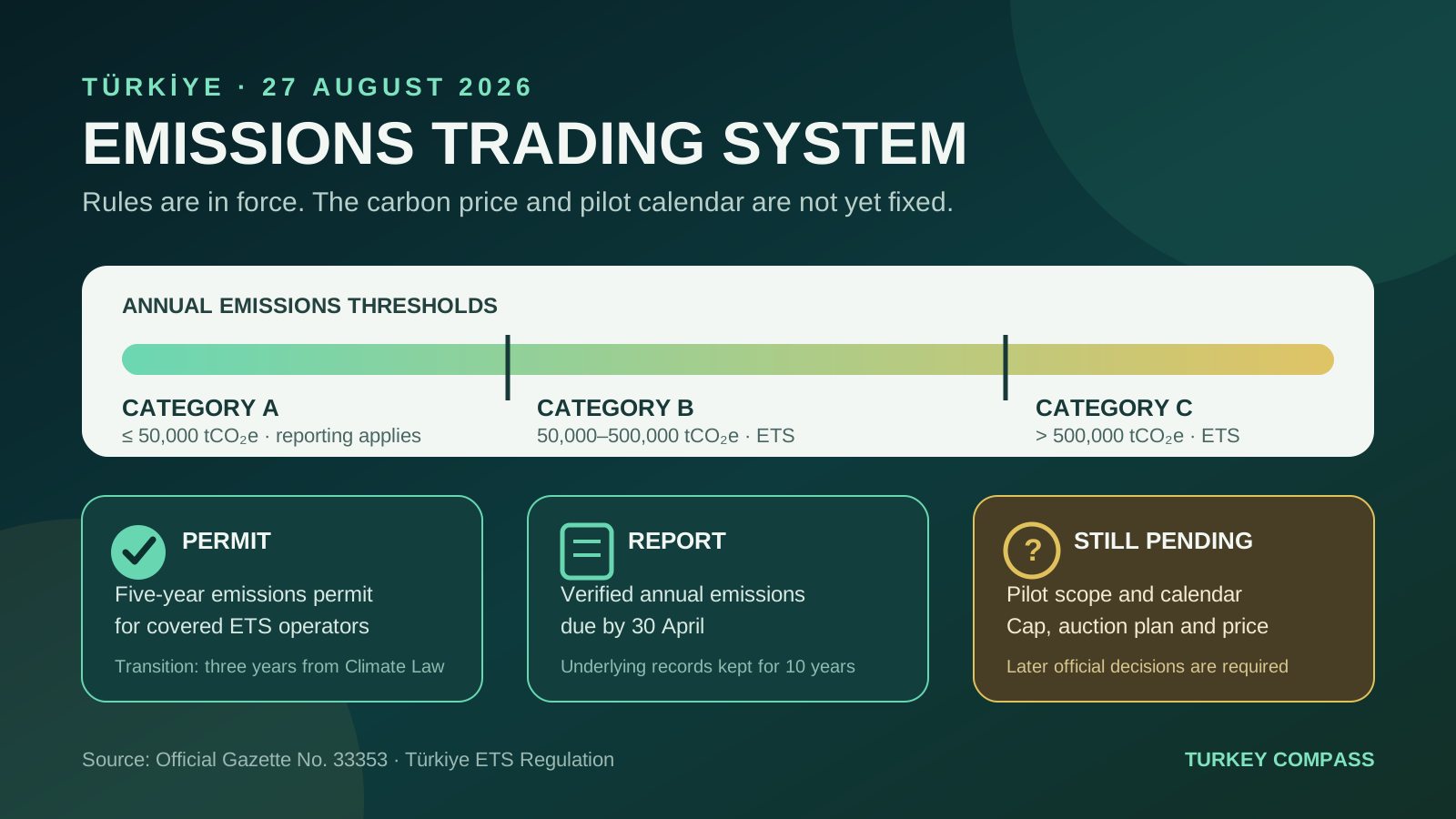
Turkey published the operating framework for its national Emissions Trading System, or TR ETS, on 27 August 2026. The regulation is immediately in force and replaces the 2014 greenhouse-gas monitoring regulation. It is a major compliance and investment milestone: it defines who enters the trading system, how emissions must be monitored and verified, how allowances can be issued and traded, and how penalties apply. It does not, however, announce a carbon price, a final pilot calendar or a complete auction schedule. International investors should separate the legal framework now in force from market parameters that still require later decisions.
Which installations enter the trading system
The ETS initially covers installations carrying out activities listed in Annex 1 when they are Category B or Category C facilities. Category B means cautiously calculated annual emissions above 50,000 and up to 500,000 tonnes of carbon-dioxide equivalent; Category C means more than 500,000 tonnes. Category A facilities, at or below 50,000 tonnes, remain subject to monitoring, reporting and verification where Annex 1 applies, even though Article 5 does not place them in the trading group. Research and development units, facilities using exclusively biomass and military elements are outside the regulation's scope. Schools, universities, hospitals and defence-industry installations have a narrower ETS exemption for their stated activities, while relevant monitoring duties continue.
A greenhouse-gas permit becomes an operating requirement
An operator inside the ETS must obtain a greenhouse-gas emissions permit from the Climate Change Directorate to continue the covered activity. Applications are made electronically and, once complete, are assessed within a maximum of 60 days. The permit lasts five years, with renewal required at least six months before expiry. The transitional article gives businesses that will fall within the system three years from the Climate Law's entry into force to obtain the permit and treats them as having a one-off temporary permit during that window. That transition should not be read as permission to postpone data preparation: monitoring plans, methodology plans and verified records are separate obligations.
The pilot exists, but its scope and dates are not fixed here
The regulation says the Turkish ETS will begin with a pilot period. It delegates the pilot's coverage, duration and detailed rules to the Carbon Market Board after consultation with institutions and civil society. The text therefore does not support claims that every covered company is already buying allowances at a known price on 27 August. It also does not publish the first system year's cap, free-allocation ratios or auction calendar. Those parameters will emerge through later board decisions, the National Allocation Plan, implementing rules and announcements by the market operator. Companies should create a decision register that distinguishes published obligations from still-pending parameters.
Monitoring and annual reporting are the immediate data challenge
Operators carrying out Annex 1 activities must prepare an approved monitoring plan and track emissions under the regulation's principles. The plan must normally be submitted at least six months before emissions monitoring begins. Each year, the operator must report the previous calendar year's emissions and activity levels by 30 April; the Directorate may extend that deadline by no more than one month. The emissions report must be independently verified before submission. The obligation is facility-specific, so a group with several plants may need separate permits and data systems. Records and underlying information must be retained for at least ten years, making auditable source data and clear ownership essential from the start.
Allowances will be issued, allocated and traded through a market
The system cap will use an emissions-intensity approach and will be announced in the National Allocation Plan after verified reports are delivered. Allowances can be placed on the market through auctions or free allocation. Free allocation uses benchmarks and verified activity levels for sub-installations; the Carbon Market Board will determine relevant ratios and sector factors. EPİAŞ is named as the market operator. Primary-market auctions will follow a published calendar, while eligible participants can trade continuously in the secondary market. The regulation also permits price-stability reserves, banking, borrowing and limited use of qualifying Turkish carbon credits, subject to later implementing limits.
What buyers of Turkish industrial assets must investigate
A share or asset transaction cannot treat carbon compliance as a personal obligation that disappears with the seller. If the operator changes, the new operator automatically assumes the previous operator's commitments and liabilities under the regulation and must notify the Directorate within 30 days. Due diligence should therefore request the facility category, Annex 1 classification, approved monitoring plan, verified emissions history, methodology plan, permit status, allowance account, unresolved notices and evidence supporting free-allocation data. Purchase agreements may allocate financial risk between parties, but they do not erase regulatory duties owed by the operator.
Penalties make classification and deadlines material
For late or missing verified emissions reports, the published 2026 amounts range from 627,450 Turkish lira for Category A to 6,274,500 lira for the largest Category C band. Article 35 says the relevant reporting penalties are doubled for businesses inside the ETS. Operating in the ETS without a valid permit can attract penalties rising to 12,549,000 lira for the largest band, based on the facility's equivalent capacity classification. The regulation also links non-compliance with allowance-delivery obligations to further consequences, including possible permit cancellation. These figures are statutory reference amounts, not an estimate of the total commercial loss from interrupted operations, financing conditions or contract claims.
What international investors and exporters should do now
First, determine whether each Turkish installation conducts an Annex 1 activity and confirm its emissions category with evidence rather than a sales brochure or consultant's guess. Second, map who owns monitoring, metering, verification, permit renewal and allowance-market tasks. Third, model more than one carbon-cost scenario because no official allowance price is announced in this regulation. Exporters serving carbon-sensitive markets should keep TR ETS compliance separate from foreign border mechanisms and customer reporting: one document will not automatically satisfy every EU or buyer requirement. Finally, track the pilot decision, National Allocation Plan, benchmark announcement, auction calendar and EPİAŞ market rules before putting a single carbon-price assumption into a valuation.
Turkey Compass assessment
The accurate headline is that Turkey now has a detailed legal and market architecture for emissions trading, not that a fully priced carbon market began overnight. Large Annex 1 installations face the clearest future trading exposure, while a broader group already has monitoring, reporting and verification duties. Investors can act today by classifying assets, securing data, checking permits and assigning contractual responsibility. They cannot yet responsibly quote a definitive allowance price or pilot start date from this regulation alone. Any proposal that does so should identify the separate official decision on which the claim relies.