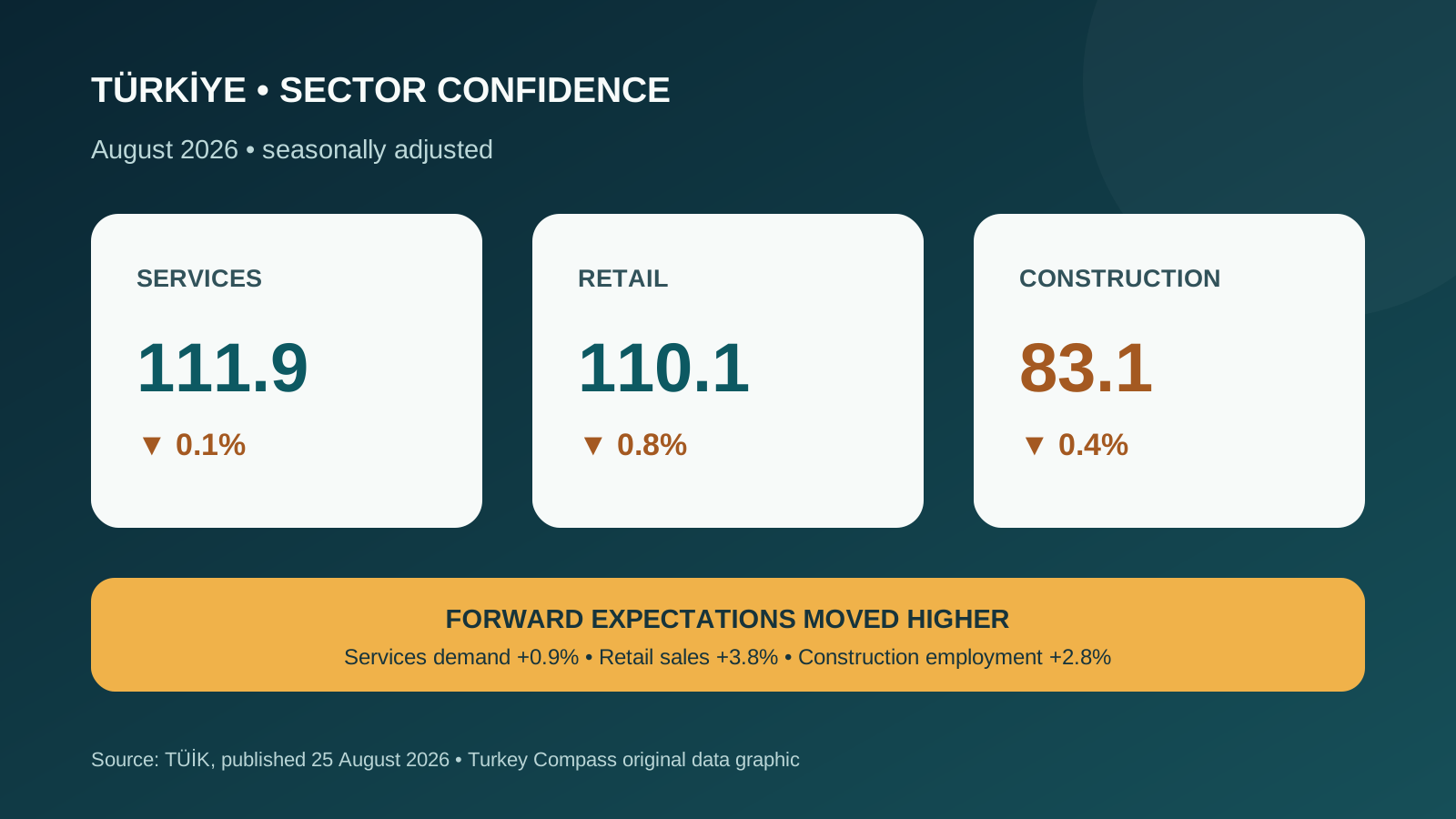
Confidence declined across Turkey's services, retail and construction sectors in August 2026, but the underlying survey was not uniformly negative. TÜİK reported monthly falls of 0.1% in services, 0.8% in retail and 0.4% in construction. The construction index remained below the 100 threshold at 83.1, while expectations for employment over the next three months rose 2.8%. For international investors, the useful signal is the split between weaker recent activity and more positive near-term plans.
The three headline indices
The seasonally adjusted service confidence index slipped from 112.0 in July to 111.9 in August. Retail declined from 111.0 to 110.1, while construction moved from 83.5 to 83.1. In these surveys, values above 100 indicate optimism and values below 100 indicate pessimism. Services and retail therefore remained on the optimistic side of the scale, while construction stayed below the threshold despite only a modest monthly fall.
Construction orders weakened
The construction component measuring the current level of registered orders fell 3.8% to 78.9. That is a sharper move than the 0.4% decline in the overall construction index and points to caution in the present project pipeline. It is not a count of building permits, completed homes or property sales. Investors should compare it with permits, production, financing and local supply before drawing a conclusion about a specific development or city.
Hiring expectations moved the other way
Construction managers' expectation for total employment over the next three months increased 2.8% to 87.3. The index remains below 100, so the result should not be described as broad optimism. Still, the direction matters: companies reported weaker current orders while becoming less negative about near-term staffing. That divergence may reflect expected new work, seasonal planning or an adjustment after the previous month's decline, rather than a guaranteed rebound.
Retail shows the same split
Retailers' assessment of business volume and sales over the past three months fell 5.8% to 114.0. By contrast, their sales expectation for the next three months rose 3.8% to 123.6. Both levels remain above 100, but the distance between recent performance and future expectations is important. A business plan should test whether anticipated demand is supported by footfall, online orders, pricing power and inventory turnover rather than treating sentiment as realised revenue.
Services remained comparatively stable
The overall service index edged down just 0.1% to 111.9. Recent business conditions fell 1.2% and recent demand eased 0.1%, while expected demand for the next three months rose 0.9% to 117.4. For tourism, professional services and other service businesses, the data suggest resilience rather than acceleration. National averages can conceal major differences between Istanbul, Antalya, coastal resorts and inland markets.
What an overseas investor should verify
Use the survey as an early indicator, not a valuation model. For a property or business decision, add sector-specific evidence: signed orders, cash flow, financing costs, vacancy, actual sales, customer concentration and location. Ask whether the company presenting an opportunity can reconcile optimistic forecasts with its recent trading figures. A national confidence index cannot validate a developer's completion date, a retailer's revenue target or a rental-yield promise.
Why one month is not a trend
The indices are seasonally adjusted, but monthly survey readings can still move with expectations, financing conditions and temporary events. August followed a July in which services and construction had risen while retail had already fallen. A reliable trend requires several releases and comparison with hard data. TÜİK's economic confidence index, due later in the week, will combine these sectoral measures with consumer and manufacturing confidence.
Turkey Compass assessment
The accurate headline is not simply that confidence fell everywhere. Current orders and recent sales weakened, yet near-term demand, sales and hiring expectations improved. Construction remains the weakest of the three sectors because its 83.1 reading is below the neutral threshold. Investors should treat the survey as a warning to separate present evidence from future promises and to demand documents that support any forecast attached to a transaction.