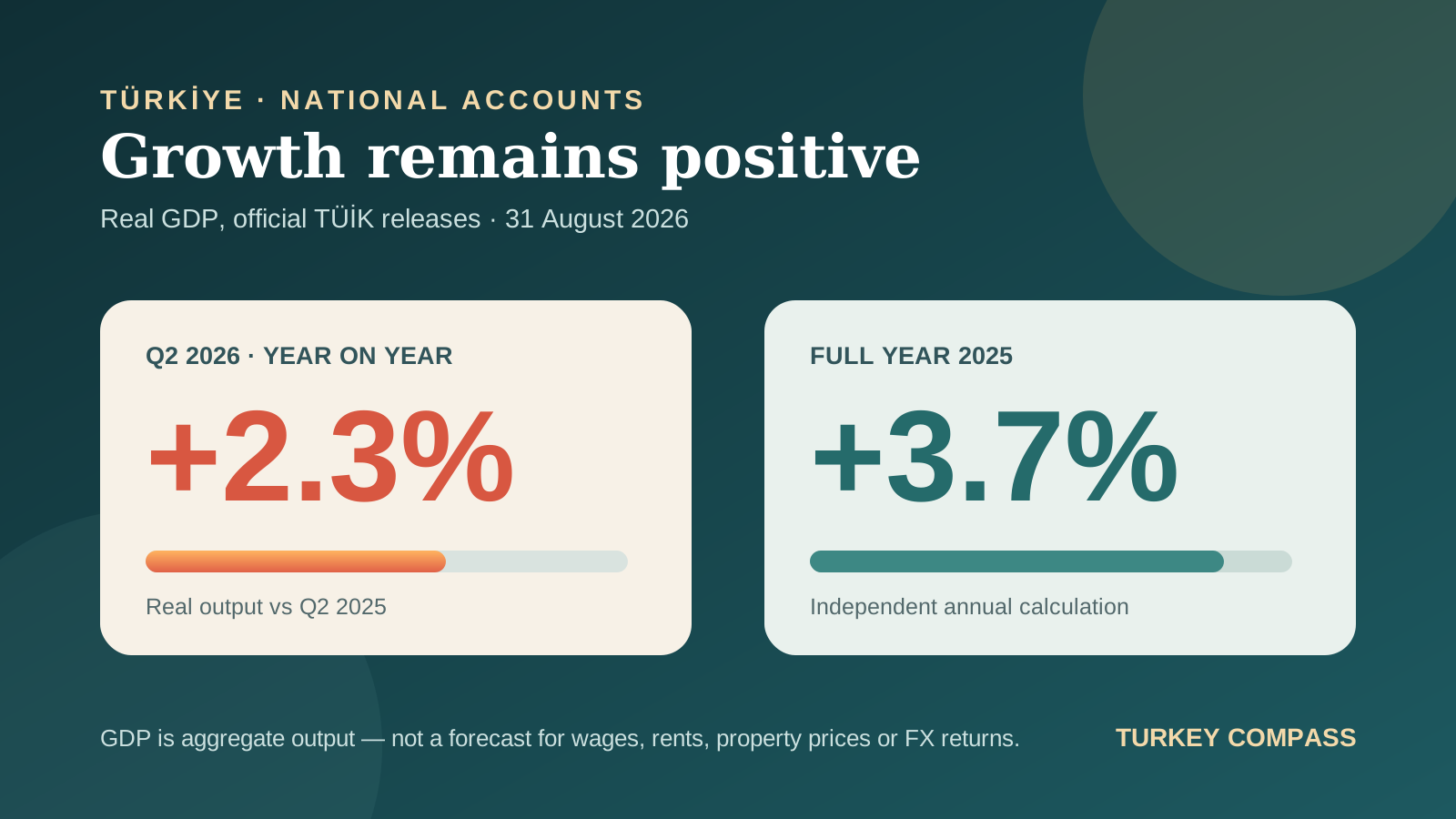
Turkey's gross domestic product increased by 2.3% year on year in the second quarter of 2026, the Turkish Statistical Institute said on 31 August. A separate annual national-accounts release published the same morning put independently calculated growth for 2025 at 3.7%. The Q2 figure confirms that aggregate output was still expanding, but it does not by itself show whether a particular company, household, property market or tourism business improved. International investors should treat it as a national starting point, not a ready-made investment signal.
What the 2.3% figure actually compares
The headline compares inflation-adjusted economic output in April–June 2026 with output in the same three months of 2025. It is an annual growth rate, not the increase from the immediately preceding quarter and not a forecast for the rest of the year. That distinction matters when market commentary mixes year-on-year, quarter-on-quarter and full-year figures. The number is also real growth: it aims to remove price changes, so it should not be read as a 2.3% increase in lira turnover or business revenue.
The 2025 annual result provides a different benchmark
TÜİK also released its independent annual GDP calculation for 2025, reporting 3.7% growth. Annual national accounts use a broader yearly data set and are not simply the sum of four newspaper headlines. The 3.7% result describes the completed 2025 calendar year; the 2.3% figure describes one quarter of 2026 compared with the corresponding quarter a year earlier. They can be placed side by side as context, but they measure different periods and should not be averaged together.
Why positive GDP does not guarantee stronger household finances
GDP measures the value added produced across the economy. It is not disposable income, average salary, purchasing power or a cost-of-living index. Households can face high rents, financing costs or food prices while national output still grows. Foreign residents should therefore combine the GDP signal with current consumer inflation, wages, exchange rates and the budget of the city where they live. A positive national rate does not prove that every household's real income rose by the same percentage.
What it means for company and market analysis
For an investor, 2.3% growth shows that the economy was larger than a year earlier in real terms, but company exposure matters more than the headline alone. Exporters depend on overseas demand and currency costs; retailers depend on household demand and margins; builders depend on permits, credit and local supply; tourism businesses depend on arrivals, pricing and seasonality. The sensible next step is to compare the national result with sector accounts, company filings, financing conditions and city-level demand rather than attaching one valuation conclusion to every Turkish asset.
Property buyers need a separate evidence chain
GDP growth does not establish that homes in Istanbul, Antalya, Alanya or İzmir will appreciate, that rents will rise, or that a development will be completed. Property decisions require title and zoning checks, an independent valuation, building and occupancy records, transaction costs, rental regulation and an assessment of local supply. Financing costs and the buyer's base currency can dominate a national growth number. The release can support a macroeconomic overview, but it is not a substitute for parcel-level due diligence or legal advice.
Foreign-currency returns can move in another direction
The 2.3% figure is a real-volume measure compiled in the national accounts. A euro, dollar or sterling investor experiences an additional layer: the lira exchange rate, inflation, financing costs, taxes and the entry and exit price of the chosen asset. Even when real GDP expands, a foreign-currency return can be negative; the reverse is also possible for a particular investment. Readers should keep national economic growth, nominal lira values and their own base-currency performance in three separate columns.
The release is an estimate and can be revised
National accounts are built from a large set of surveys, administrative records and price measures. Early quarterly estimates are published before every final source is available and may later change when more complete information arrives or annual accounts are reconciled. A revision would not automatically mean the original release was false; it is part of the statistical process. Comparisons should use figures from the same vintage where possible and preserve the publication date when recording an investment thesis.
Turkey Compass fact check
Correct: TÜİK reported that Turkey's real GDP in Q2 2026 was 2.3% higher than in Q2 2025, and its separate annual calculation showed 3.7% growth for 2025. Incorrect: every sector, salary, rent, house price or investment return rose by those percentages. The data describe aggregate output for defined periods. Decisions still require sector, city, inflation, financing, legal and currency evidence matched to the reader's own exposure.