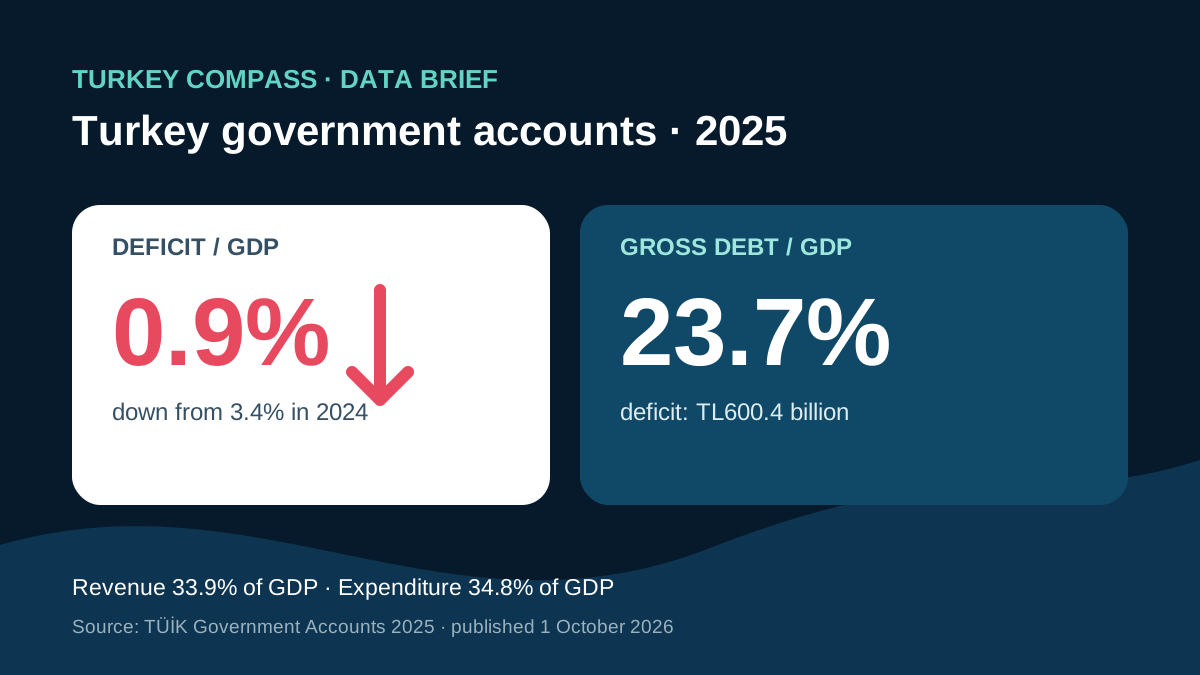
Turkey's general-government deficit was estimated at TL600.4 billion in 2025, reducing the deficit-to-GDP ratio from 3.4% in 2024 to 0.9%, TÜİK reported on 1 October 2026. The central-government subsector remained in deficit, while local governments and social-security funds recorded surpluses. The consolidated gross-debt ratio moved in the opposite direction, rising to 23.7% of GDP.
The headline improvement is large
A fall of 2.5 percentage points in the deficit ratio is a material fiscal improvement. It means the gap between general-government revenue and expenditure was much smaller relative to the economy than in 2024. It does not mean the public sector ran an overall surplus: the balance remained negative by TL600.4 billion.
Revenue and spending both increased in lira terms
General-government revenue reached TL21.43 trillion, equal to 33.9% of GDP. Expenditure rose to TL22.03 trillion, but its GDP share declined to 34.8%. Nominal lira totals should be read alongside the ratios because high inflation can lift both the budget figures and nominal GDP.
Debt rose even as the deficit narrowed
The consolidated gross-debt stock increased to 23.7% of GDP. The deficit measures one year's flow; debt is the accumulated stock, so the two can move differently. Currency valuation, financing needs, cash balances and the composition of liabilities can all influence the debt ratio beyond the annual deficit.
The tax mix shifted
Taxes on production and imports accounted for 44.5% of total tax and social-contribution revenue, down from 46.6% in 2024. Current taxes on income and wealth rose to a 28.3% share, net social contributions were 27.1%, and capital taxes stayed at 0.1%. Total tax and social-contribution revenue reached TL17.00 trillion.
What international investors should take from the release
A lower deficit ratio can support perceptions of fiscal discipline, but it is not a stand-alone signal for the lira, interest rates or Turkish assets. Investors should combine it with inflation, central-bank policy, external financing, maturity and currency composition of public debt, and the quality of one-off versus recurring revenue.
What the release does not change
This statistical bulletin does not itself alter tax rates, residence rules, property-buying requirements or bank procedures. Foreign residents and companies should not infer a personal tax cut or a new investment incentive from the headline. Legal and tax decisions still require the current regulation and, where appropriate, professional advice.