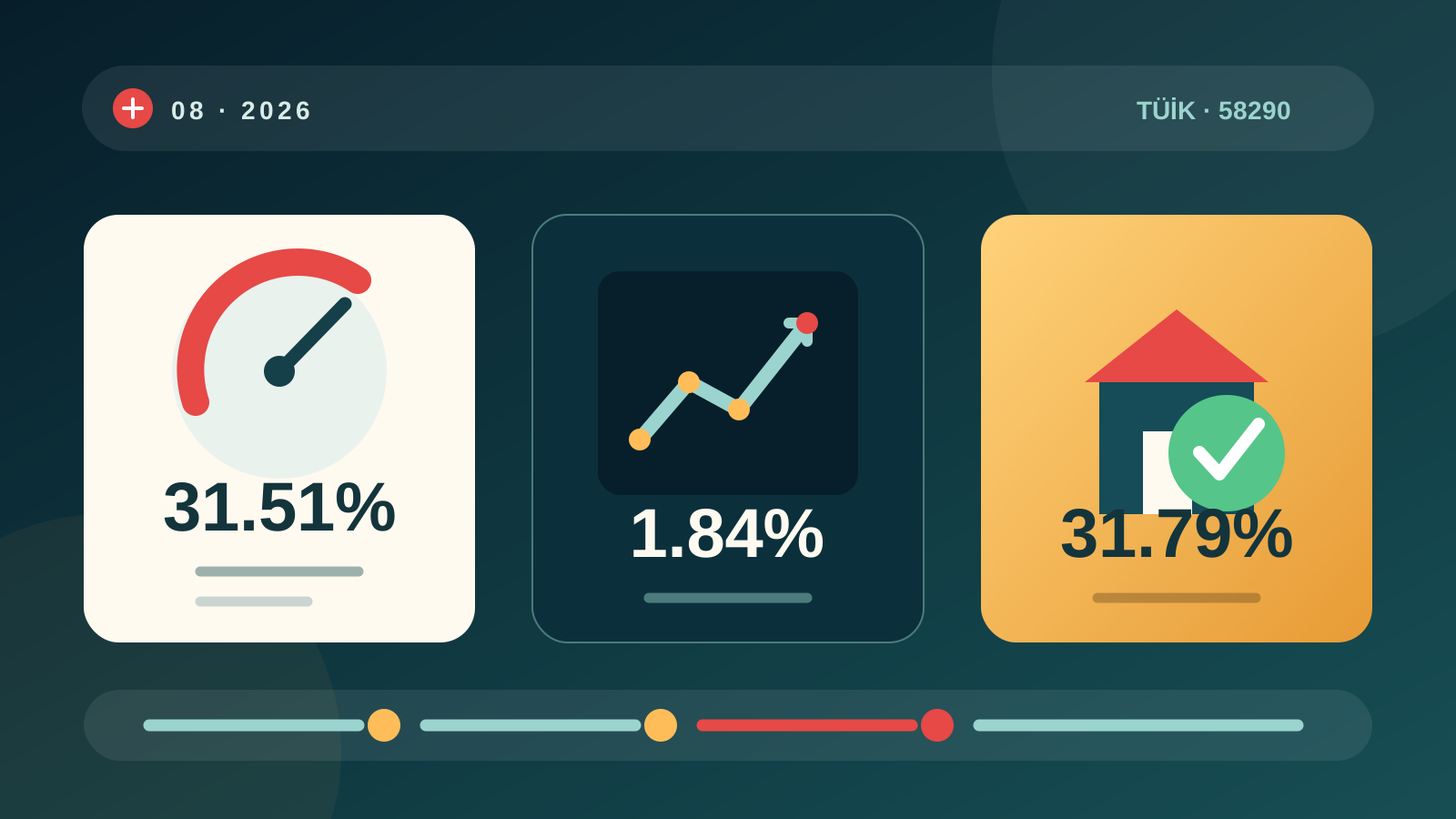
Turkey's consumer price index rose 1.84% in August 2026 and was 31.51% above a year earlier, the Turkish Statistical Institute reported on 3 September. The annual rate was slightly below July's 31.75%, but that is disinflation, not a fall in prices: the overall price level increased again during the month. For tenants and landlords whose standard renewal falls in September, the separately reported 12-month CPI average was 31.79%, the reference ceiling under the usual rent rule. Contract history and legal exceptions still matter.
Four percentages describe four different comparisons
TÜİK reported a 1.84% increase from July to August, a 22.07% rise since December 2025, a 31.51% rise from August 2025 and a 31.79% increase on a 12-month-average basis. These figures are not alternatives for the same question. The annual rate is the clearest headline for the pace of inflation; the monthly rate shows the latest movement; the year-to-date figure helps with 2026 budgeting; and the 12-month average has a specific role in ordinary rent renewals. Mixing them can produce a materially wrong household or investment calculation.
Annual inflation slowed, yet the monthly pace edged up
The annual CPI rate eased from 31.75% in July to 31.51% in August. At the same time, the monthly change increased from 1.78% in July to 1.84% in August. Both statements can be true because they compare different periods and because an older monthly change drops out of the annual calculation. The practical conclusion is restrained: inflation remained high and prices continued rising, although the year-on-year pace was a little slower. It would be inaccurate to describe the release as a broad decline in the cost of living.
Transport was the largest monthly pressure among the heavy groups
Among the three expenditure groups with the greatest CPI weights, transport rose 4.82% in August and contributed 0.82 percentage point to the overall monthly change. Housing, water, electricity, gas and other fuels increased 2.26% and contributed 0.27 point. Food and non-alcoholic beverages rose only 0.22% during the month and contributed 0.06 point. These are national averages, not a promise about a particular airline ticket, fuel purchase, electricity bill, restaurant or supermarket basket. Personal experience can differ substantially by city and spending pattern.
Housing costs still had the highest annual rise of the three
On a year-on-year basis, housing, water, electricity, gas and other fuels increased 39.77%, more than the headline CPI. Transport was 35.08% higher and food and non-alcoholic beverages was up 33.79%. Their contributions to annual CPI were 5.01, 5.94 and 8.12 percentage points respectively. Contribution depends on both the price change and the category's weight, so the group with the highest percentage increase need not make the largest contribution. For residents, the figures point to continuing pressure on recurring essentials even as headline inflation eases gradually.
What the 31.79% September rent figure means
For an ordinary Turkish-lira housing or roofed-workplace lease entering a new rental year in September, the 12-month-average CPI change of 31.79% is the standard statutory upper reference under Article 344 of the Turkish Code of Obligations. It is a ceiling, not an automatic increase and not a monthly inflation forecast. A contract may provide a lower rate, and the parties may agree a smaller increase. Five-year rent-determination cases, foreign-currency clauses, court decisions and other specific circumstances can produce a different legal analysis, so disputed or high-value cases need individual advice.
A simple calculation — and its limits
If the existing monthly rent is TRY 30,000 and the standard 31.79% ceiling applies, the mathematical upper amount is TRY 39,537: multiply 30,000 by 1.3179. This example does not decide whether the landlord is entitled to that amount, whether the contract already specifies a lower increase, or whether a five-year reassessment rule is relevant. The renewal month also matters: the August 2026 cap was based on July's 12-month average, whereas a September renewal uses the August release. Do not substitute the 31.51% annual headline for the 31.79% legal reference.
Most item classes rose, but the index is not every household
Of the 174 detailed classes covered by the index, 134 increased in August, 35 decreased and five were unchanged. That breadth helps explain why a lower annual headline may not feel like immediate relief. CPI is a weighted national measure built from a representative consumption structure; it is not the personal inflation rate of a retiree in Antalya, a student in Istanbul or a family in Ankara. Foreign residents should therefore combine the official benchmark with their own recurring expenses, especially rent, transport, utilities, school costs and imported products.
The next official checkpoint is 5 October
TÜİK scheduled the September 2026 CPI bulletin for 5 October. Until then, August's 31.79% 12-month average remains the reference for standard rent renewals that begin in September, not for renewals in every future month. Investors should also avoid treating a single release as proof of a durable trend. The Central Bank's policy path, administered prices, exchange rates, energy costs and domestic demand will influence coming readings. The sound reading today is narrower: annual inflation eased modestly, monthly prices rose, transport accelerated and the rent reference changed.