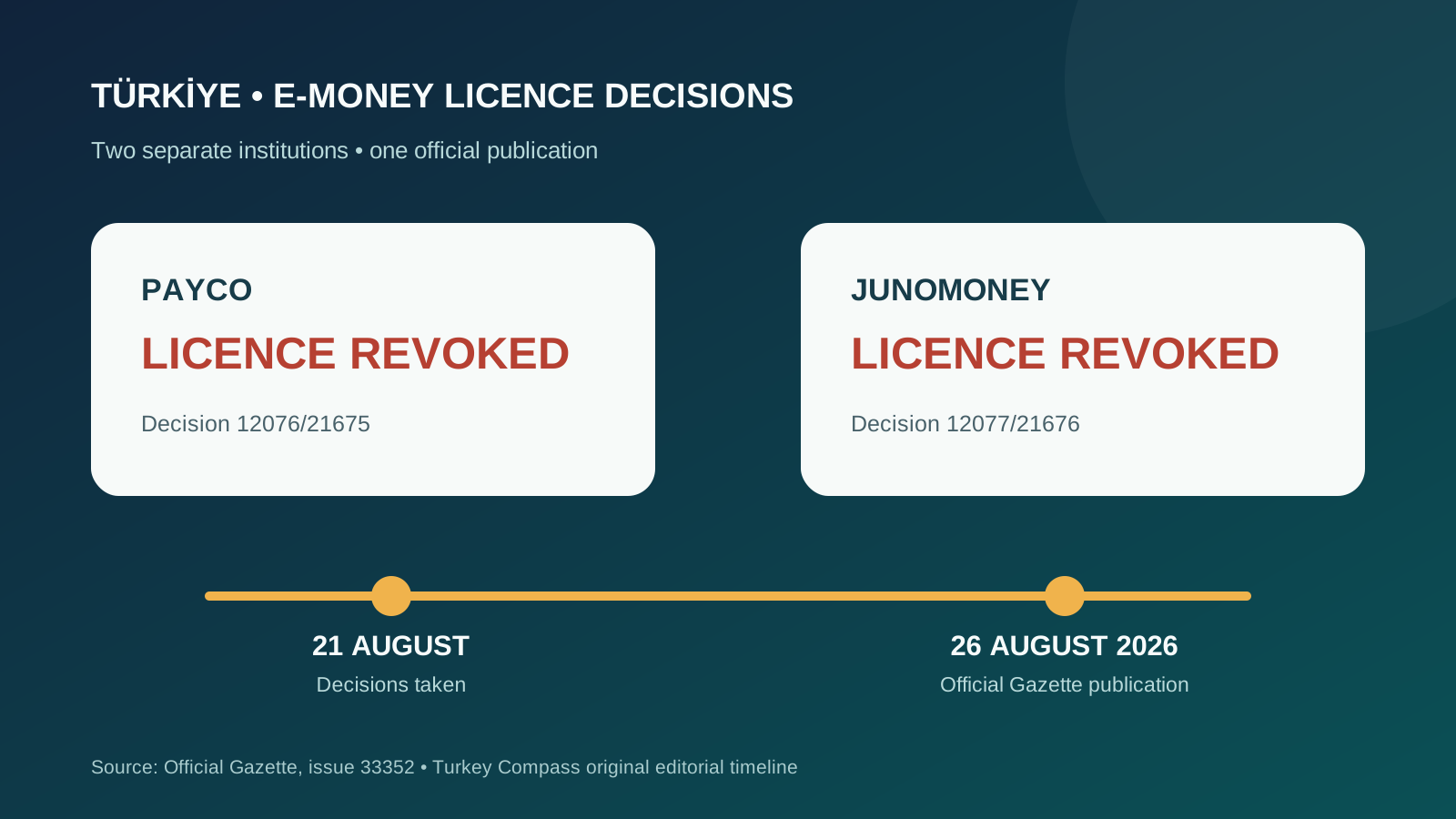
Turkey's central bank has revoked the electronic-money operating licences of Payco and Junomoney. The two decisions were taken on 21 August and published in the Official Gazette on 26 August 2026. The regulatory outcome is clear: the companies no longer hold the authorisation cited in their original licence decisions. What is not yet clear from the notices is how any individual customer relationship, balance or merchant settlement will be handled, so users should distinguish the official decision from unsupported claims circulating around it.
Two separate licences were cancelled
CBRT decision 12076/21675 cancels the licence granted to Payco in July 2022. Decision 12077/21676 cancels the licence granted to Junomoney in May 2025. Both notices rely on the licensing and supervisory provisions of Law No. 6493. They are separate regulatory decisions concerning two legal entities; they do not amount to a sector-wide ban on Turkish electronic-money services.
What the notices do not say
Neither published decision provides a customer-by-customer balance figure, a reimbursement date, a transfer route or a replacement provider. The texts also do not announce that every card, wallet or merchant integration failed at a particular minute. Those operational questions require a dated statement from the company or the regulator. Screenshots and anonymous social-media messages are not a substitute for that evidence.
The legal safeguard is not a payout schedule
Turkey's payment-services framework requires customer funds collected by electronic-money institutions to be kept in safeguarding accounts at banks. The CBRT has previously described this protection under Article 22 of Law No. 6493. That legal structure matters, but it should not be confused with an immediate refund promise, a bank-deposit guarantee or confirmation of any particular user's balance. The new decisions contain no individual repayment timetable.
A practical checklist for users
Do not add new funds until the service status and instructions are clear. Save account statements, transaction IDs, receipts, card details and the company's latest messages. Check the Official Gazette, the CBRT's authorised-institution pages and the company's own verified channels. If money is outstanding, make a written support request and preserve the response. Avoid paying anyone who claims they can release a balance for an advance fee.
What merchants and employers should do
Businesses that used either provider for collection, payroll or settlement should reconcile pending transactions and identify which bank account receives settlement funds. Pause new routing where appropriate, preserve contracts and technical logs, and prepare an authorised alternative provider before moving customers. A licence revocation is a compliance event; it should be handled through documented finance, legal and IT controls rather than an improvised social-media announcement.
Why the online register may briefly lag
When Turkey Compass checked early on 26 August, the CBRT's public table of operating electronic-money institutions still displayed both names. The Official Gazette decisions are the newer legal record, and public lists may require an administrative update. Readers should record the date and decision numbers, then recheck the regulator's table rather than interpreting a temporary mismatch as proof that the revocations were withdrawn.
Turkey Compass assessment
The confirmed news is limited but important: two named licences have been revoked. It is not responsible to infer a universal loss of customer money, an instant repayment date or a reason beyond what the decisions state. Customers need documentation and official instructions; merchants need reconciliation and continuity planning. This report will be corrected if the CBRT or either company publishes a formal transition notice.