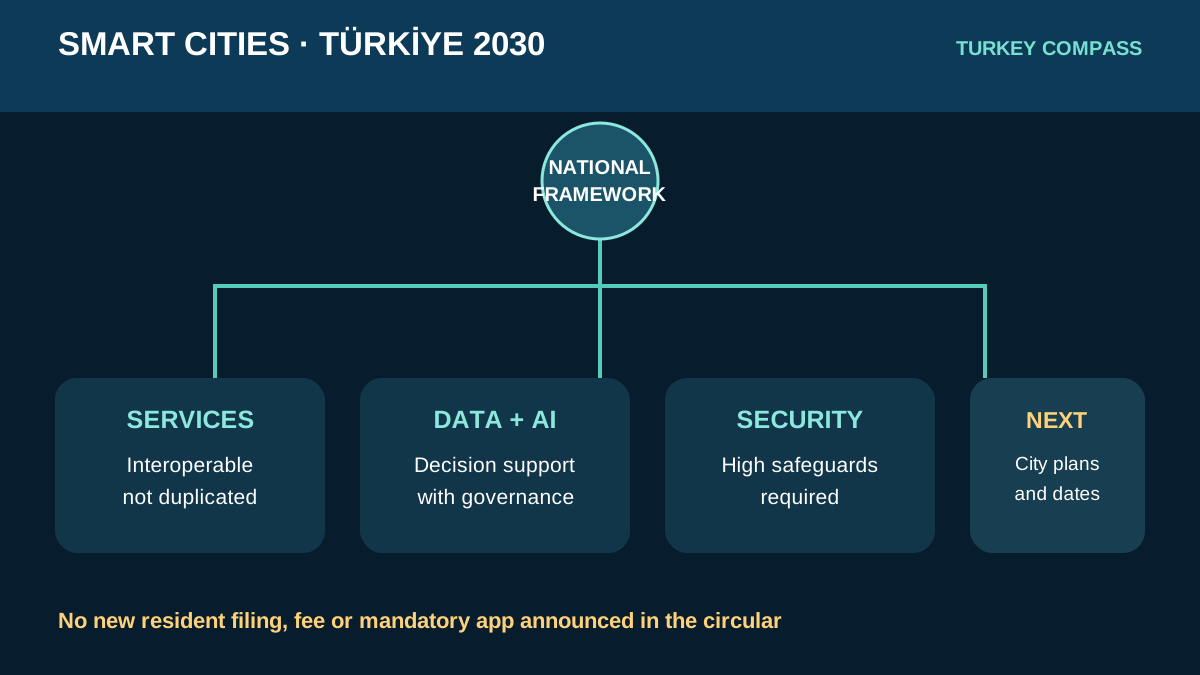
Türkiye has formally adopted a national framework for smart-city development through 2030. Presidential Circular 2026/11 asks central government bodies and municipalities to coordinate secure, interoperable and inclusive digital projects, with emphasis on data management, artificial-intelligence-supported decisions and integrated city services. For international residents and investors, the practical point is equally important: the circular sets direction, but it does not name a city-by-city rollout date, launch a single national resident app or change an existing application procedure overnight.
A national coordination framework, not a finished service catalogue
The circular follows the completed 2020–2023 strategy period and places the Environment, Urbanisation and Climate Change Ministry in the coordinating role. Public institutions, local authorities, universities, businesses and civil-society organisations are expected to contribute. The text identifies priorities, but it does not list which transport, utility, permit, emergency or municipal-payment service will change first in Istanbul, Antalya, Ankara or another city.
Data, AI and interoperability are the core themes
The framework calls for city systems that can work together rather than duplicate investments. It gives priority to data governance, AI-assisted decision mechanisms, integrated smart-city services and digital city management from urban areas to rural communities. That may shape future procurement and local platforms, but the circular alone is not proof that a specific algorithm will decide a resident's case or that existing municipal databases have already been merged.
Digital security is an explicit condition
Authorities are instructed to keep digital-security measures at a high level while building new services. Residents should still use only official municipal or e-government domains, verify the publisher of mobile applications and avoid sending identity documents or payment details through links circulated in messaging groups. A page using the phrase 'smart city' is not automatically an authorised public service.
No new filing, fee or deadline for residents
The published circular does not create a new residence-permit step, property registration rule, tourism fee, utility tariff or mandatory account for foreigners. It also does not promise free transport, faster permits, lower bills or automatic access to public data. Any such change would need a separate regulation, municipal decision or service announcement with its own effective date and eligibility rules.
What to watch next
The full strategy and action plan is to be published through the ministry's smart-cities portal. Useful follow-up evidence will include named responsible institutions, measurable targets, budgets, pilot cities, procurement notices and local implementation calendars. Investors should distinguish those project-level documents from the national circular; residents should rely on their municipality and e-Devlet for service-specific instructions.
Ministry smart-cities portal — 2024–2030 strategy preparation →
General Directorate of Geographic Information Systems — strategy workshops →