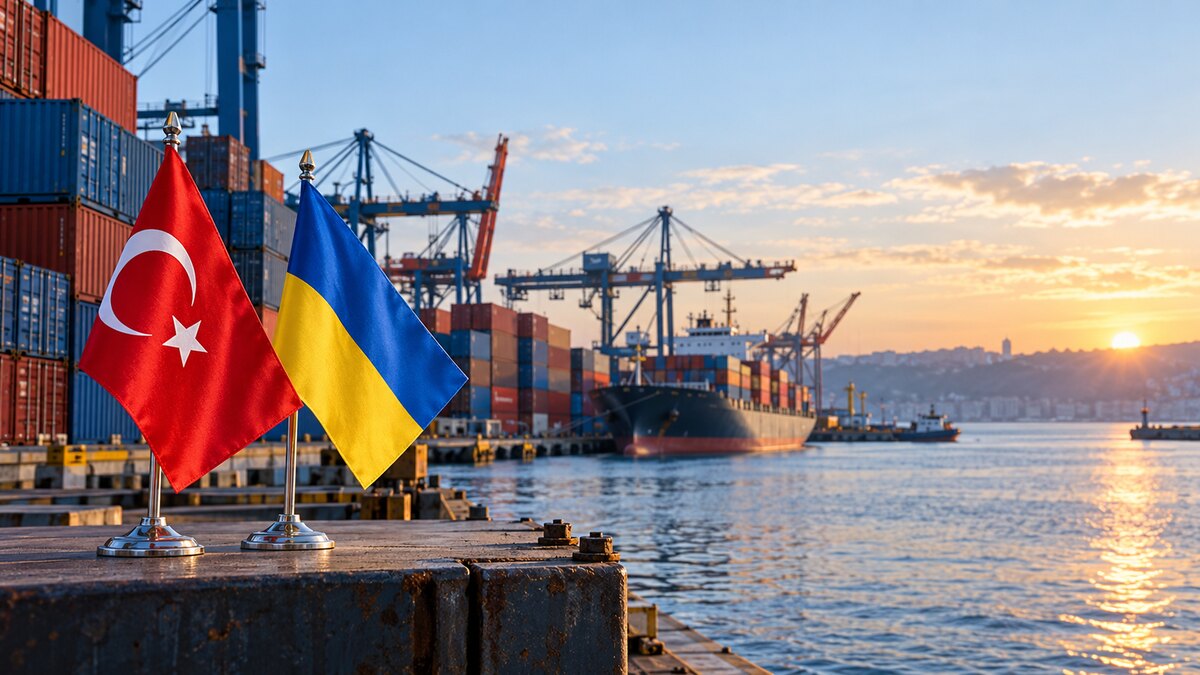
The Türkiye–Ukraine Free Trade Agreement entered into force on 1 October 2026, more than four years after it was signed. The first practical distinction for companies is the date: the treaty is legally in force now, while its customs-duty arrangements for trade in goods are scheduled to apply from 1 January 2027. International investors and traders should use the intervening period to check product classification, origin rules and documentation rather than assuming that every shipment is already duty-free.
Two dates matter
Türkiye's Trade Ministry says the agreement entered into force on 1 October 2026. It separately states that customs-duty arrangements for goods will begin on 1 January 2027. Contracts, quotations and landed-cost models for late-2026 deliveries should therefore not automatically apply the 2027 preference. The relevant customs treatment depends on the import date and the detailed tariff schedule.
The agreement reaches beyond tariffs
The official statement says the framework covers trade in goods as well as services, investment, e-commerce, trade facilitation and customs cooperation. It also provides for quota-free bilateral and transit transport between the two countries, intended to support commercial flows. That transport provision concerns trade logistics; it does not create visa-free residence, employment rights or a personal travel entitlement.
What importers and exporters should verify
A reduced or zero tariff is normally available only when the product falls within the relevant concession and satisfies the treaty's rules of origin. Businesses should confirm the HS code, origin evidence, invoice wording, transport route and the customs declaration procedure with a qualified customs broker. A product made with third-country inputs may need additional analysis before preferential treatment can be claimed.
No instant across-the-board price cut
The agreement does not mean that every Turkish or Ukrainian product becomes cheaper overnight. Customs duty is only one part of landed cost; VAT, special taxes where applicable, freight, insurance, financing and distributor margins remain. The Ministry also says sensitive sectors were taken into account, so some products may retain protection, quotas or staged treatment.
Why the timing matters for investors
The deal is intended to preserve preferential trading opportunities while Ukraine's economic integration with the European Union advances. The Turkish statement says it should give Turkish and Ukrainian businesses a competitive advantage over third-country suppliers. Investors evaluating production, warehousing or distribution should model the exact product list and supply chain, not rely on the headline alone.
A practical 2026–2027 checklist
Before signing a 2027 supply contract, obtain the product-level tariff line and origin rule, decide who will provide origin documents, specify Incoterms and responsibility for customs clearance, and test both preferential and non-preferential landed costs. For regulated goods, separately verify technical standards, sanitary rules, export controls and licensing. The FTA does not replace those requirements.
Anadolu Agency: entry into force and scope, 1 October 2026 →
President of Ukraine: parliamentary ratification noted on 16 July 2026 →