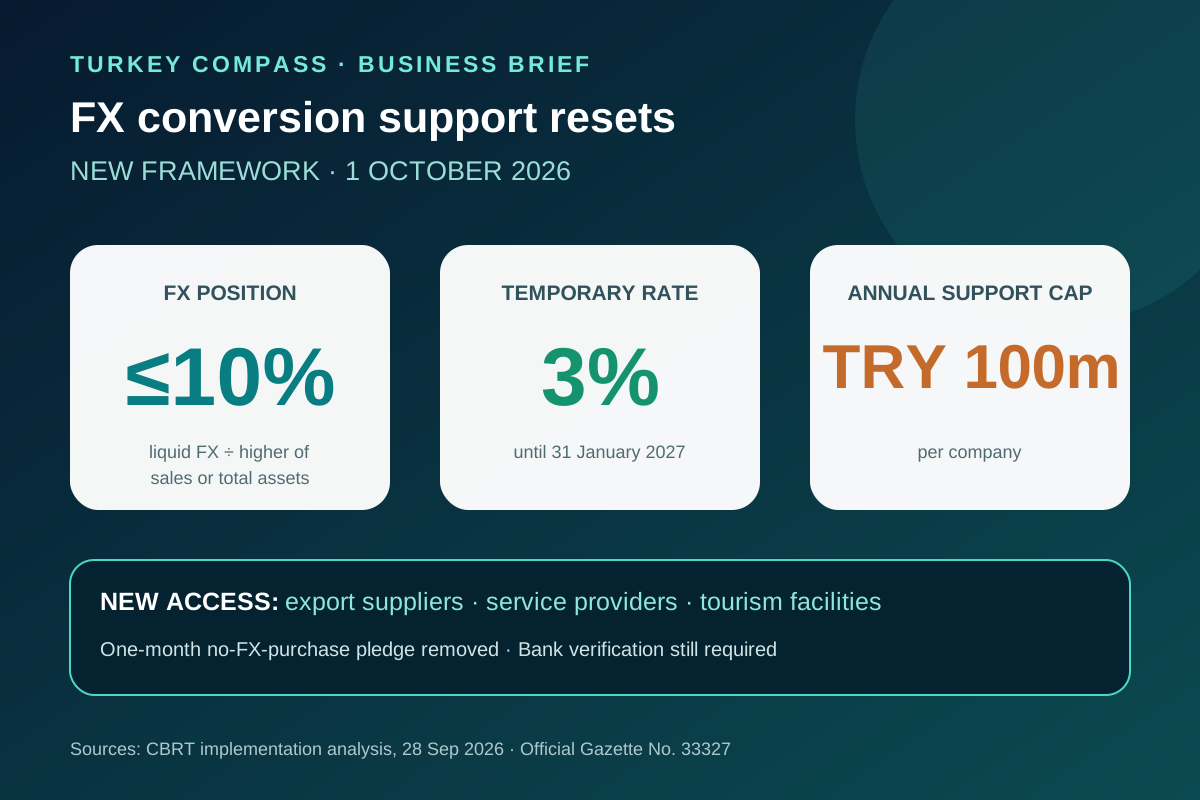
Turkey's redesigned foreign-exchange conversion support starts on 1 October 2026. The main operational change is that companies no longer make a one-month commitment not to buy foreign currency after a supported sale to the Central Bank. Instead, eligibility is tested through a foreign-exchange position ratio capped at 10%. The temporary support rate remains 3% until 31 January 2027, but annual conversions are now tied to value added and annual support is capped at TRY 100 million per company. Export suppliers and providers of foreign-currency-earning services, including tourism facilities, also gain a route through intermediary firms. The CBRT Blog article explains the implementation; the binding framework is the official communiqué and banks' current application instructions.
The one-month FX purchase ban is removed
Under the previous process, a company receiving conversion support undertook not to buy foreign currency for one month. From 1 October, that commitment is replaced by an FX-position test. The change gives firms more flexibility to manage imports, debt service and working capital, but it does not make every conversion eligible: the bank must still confirm the source of the foreign currency and the company's compliance before support is paid.
How the 10% ratio works
The new ratio divides liquid foreign-currency assets by the higher of net sales revenue or total assets. The result must not exceed 10%. Companies should not calculate this from a single bank balance: the test covers the prescribed liquid-FX position and accounting denominator, and the intermediary bank may request supporting documents. A finance team should therefore ask its bank which reporting date, consolidated entities and evidence apply before booking a supported conversion.
The rate is temporarily 3%, not an unlimited subsidy
The underlying communiqué states a 2% support rate, while the temporary provision—extended to 31 January 2027—keeps the effective rate at 3% for the period covered by the implementation rules. The CBRT transfers the support through the intermediary bank after the foreign currency is sold at the conversion rate. The foreign currency sold to the Central Bank is not returned, and banks may charge a commission within the maximum set by the CBRT.
Value added and TRY 100 million set the annual ceiling
A firm's annual amount of foreign currency eligible for support is limited by value added, calculated as annual operating profit plus labour costs. Annual support itself cannot exceed TRY 100 million per company. For the first utilization period—the fourth quarter of 2026—the usable amount is one quarter of calculated annual value added and one quarter of the annual support ceiling. The cap is therefore a maximum, not an automatic entitlement.
Export suppliers can receive support directly
Foreign currency brought to Turkey by a foreign-trade capital company, sectoral foreign-trade company or another intermediary exporter may be sold on behalf of the supplier that produced the exported goods. The supplier must document the FX-position test to the intermediary bank, and the support transferred by the CBRT is paid directly into the supplier's account. Contracts and customs, invoice and payment records should clearly connect the supplier, intermediary and export proceeds.
Tourism facilities and other service providers are included
The same intermediary method applies to foreign-currency-earning services: an agency may bring in and convert the proceeds on behalf of the company that actually provides the service. The CBRT analysis specifically gives tourism facilities as an example. A hotel or other service provider should not assume that all card, platform or agency receipts qualify; it should have the bank confirm the eligible service, intermediary relationship and proof of foreign origin.
What companies should do before 1 October
Ask the intermediary bank for its current document list and commission schedule; calculate the 10% ratio using the bank's prescribed definitions; reconcile the annual operating-profit and labour-cost figures; map related companies and intermediary contracts; and retain evidence that funds are foreign-sourced. False declarations or irregular use can trigger recovery of support with exchange differences and interest, suspension of support and CBRT-backed credit applications, and possible criminal referral. The CBRT Blog notes that its authors' views are their own, so a transaction should be checked against the communiqué and the bank's live instructions.
Official Gazette No. 33327 — Communiqué No. 2026/11, 1 August 2026 →