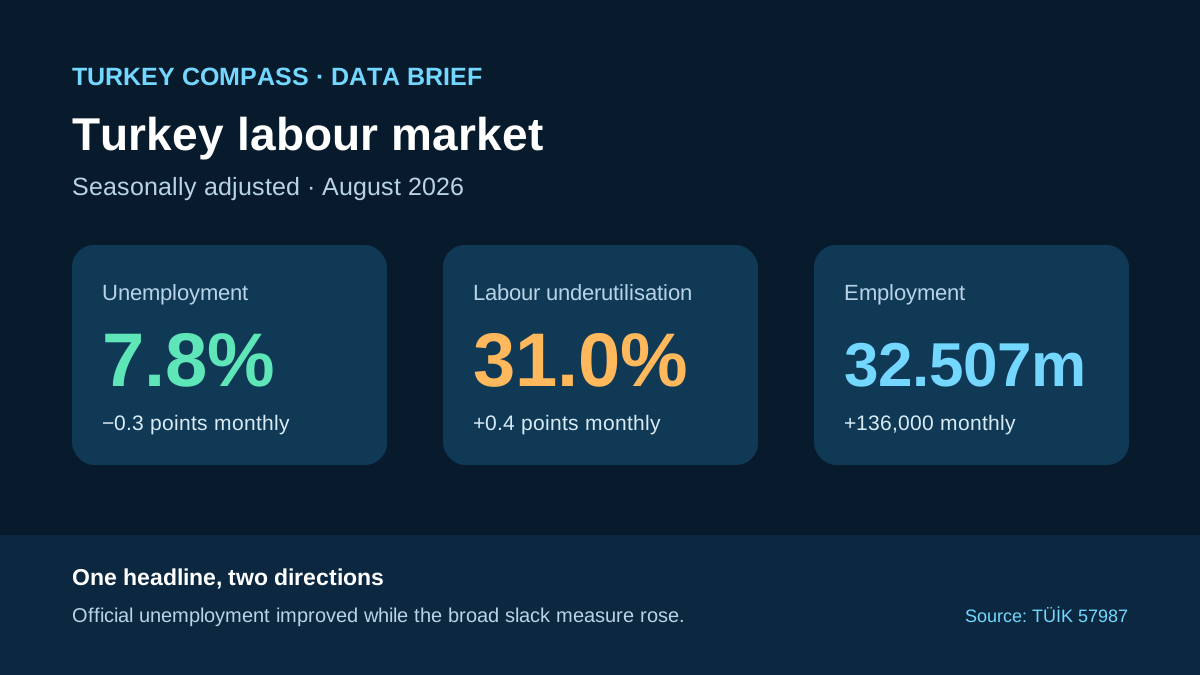
Turkey's seasonally adjusted unemployment rate fell by 0.3 percentage points to 7.8% in August 2026, TÜİK reported on 30 September. Employment rose by 136,000 to 32.507 million and the number of unemployed people fell by 106,000 to 2.740 million. The headline improved, but the broad labour-underutilisation rate increased by 0.4 points to 31.0%, so the release is not a simple all-clear for jobseekers or employers.
Employment rose, but the labour force barely changed
The labour force increased by only 29,000 to 35.247 million, while the participation rate stayed at 52.5%. The employment rate rose 0.1 point to 48.4%. These seasonally adjusted figures show a better monthly balance between jobs and unemployment, but they do not identify which regions, occupations or contract types produced the change.
Youth unemployment improved more sharply
Among people aged 15–24, unemployment fell 1.1 points to 13.0%. The rate was 9.7% for young men and 19.4% for young women. The overall gender gap also remained large: unemployment was estimated at 6.6% for men and 10.1% for women. National averages therefore conceal markedly different experiences.
Why the 31% underutilisation rate matters
TÜİK's broad measure combines unemployed people, time-related underemployment and the potential labour force. It rose to 31.0% even as headline unemployment fell. Both the combined rate of unemployment plus time-related underemployment and the rate combining unemployment with the potential workforce were 20.2%. The divergence suggests that many people still want more hours or have a looser attachment to available work.
What foreign jobseekers should not infer
The survey does not count vacancies, forecast wages or determine work-permit eligibility. Residence permission alone is not a general authorisation to work, and some professions have separate citizenship, licensing or diploma-recognition rules. A foreign applicant should verify the employer, written salary, social-security registration and permit route before relying on any national percentage.
A practical reading for business and relocation
The result is mildly positive for current labour-market momentum, while the broad slack measure calls for caution. Employers should test local skill availability and wage expectations rather than assume that a lower national rate means recruitment will be harder everywhere. Households planning a move should compare actual vacancies, net income, rent and commuting costs in the chosen city. Monthly seasonally adjusted data can be revised, so several releases are more informative than one.