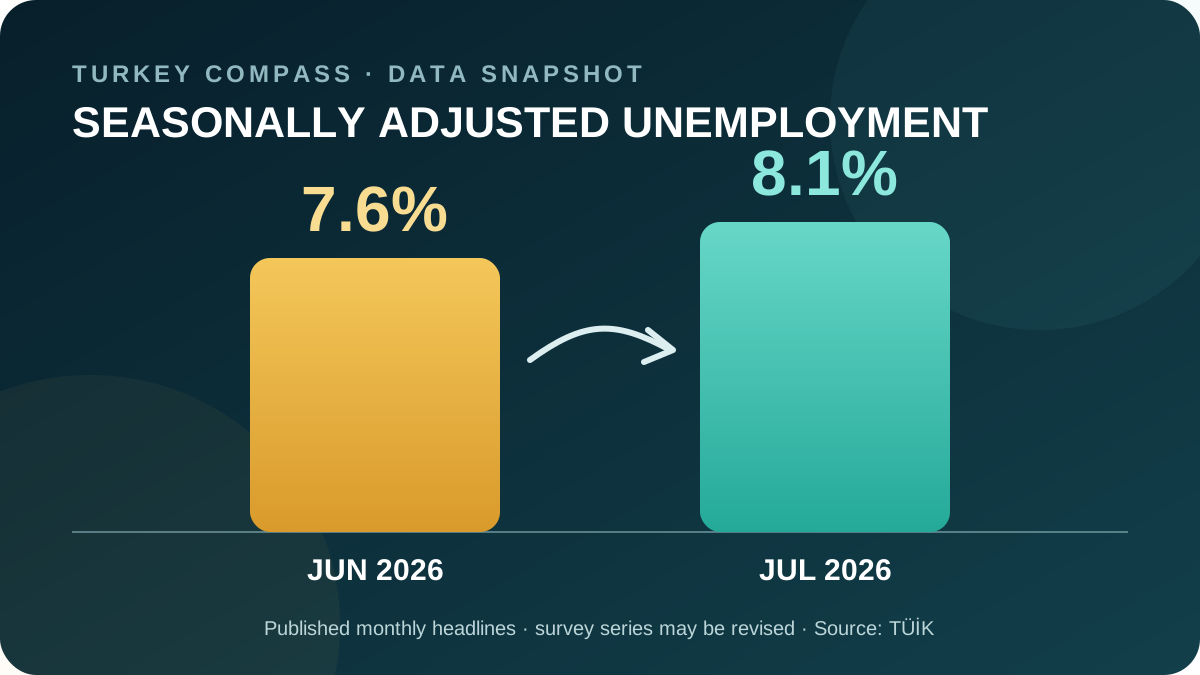
Turkey's seasonally adjusted unemployment rate was 8.1% in July 2026, according to the monthly Labour Force Statistics bulletin released by the Turkish Statistical Institute (TÜİK) on 31 August. The official June release had reported 7.6%. The comparison shows that the latest headline is less favourable, but it should not be converted into a personal probability of finding work. The survey describes the national labour market; it does not count advertised vacancies or measure the legal employability of foreigners.
What the 8.1% rate actually measures
The unemployment rate is the share of the labour force that has no job, is available to start and has recently taken defined steps to seek work. The labour force includes people who are employed and people who meet the statistical definition of unemployed. It does not include everyone aged 15 or over, because students, retirees, people doing unpaid household work and others outside the labour force are treated separately. For that reason, 8.1% does not mean that 8.1% of Turkey's entire population is unemployed.
How to read the change from the June headline
The June bulletin published a seasonally adjusted rate of 7.6%, while the July bulletin's headline is 8.1%. That is a difference of 0.5 percentage points between the two published headlines. Monthly labour-force estimates are survey results and may be revised when new seasonal-adjustment information is incorporated. Turkey Compass therefore treats the move as a current signal, not proof of a permanent trend. One month alone cannot establish whether hiring conditions have changed for a specific profession or city.
Why it is not a vacancy or hiring indicator
A national unemployment rate can rise while some employers still struggle to recruit, and it can fall while a particular sector reduces staff. Vacancies depend on occupation, qualifications, language, pay, season and location. Tourism-heavy coastal provinces can follow a different calendar from manufacturing centres or Ankara's public and professional services. Anyone assessing a job offer should compare current vacancy listings, the proposed net salary, working hours, social-security registration and the cost of housing rather than relying on the national percentage alone.
Foreign nationals face a separate legal filter
The TÜİK rate covers the labour market statistically; it does not tell a foreign applicant whether an employer can legally hire them. In most cases, employment requires a valid work permit tied to the worker, employer and position. Residence permission by itself is not a general work authorisation. Some professions are reserved for Turkish citizens or subject to separate recognition and licensing rules. Applicants should verify the permit route before accepting work or paying an intermediary, and should be cautious of offers promising legal employment without a written contract or official application.
The number is not a verdict on salaries or living costs
Unemployment, wage growth, inflation, rent and purchasing power are different indicators. An 8.1% unemployment rate does not show whether a salary is sufficient in Istanbul, Antalya, İzmir or a smaller city. It also does not measure informal work, contract quality or the stability of seasonal income. A relocation budget should use the offered take-home pay, housing deposit and rent, commuting costs, health coverage, taxes and exchange-rate exposure. Investors should combine labour data with output, sales, confidence and sector-specific employment evidence.
What employers and investors can take from it
The July result is a useful warning against assuming that headline economic growth automatically produces broad-based job gains. It may indicate more available labour nationally, but it does not prove that the required skills are available at the right location and wage. Employers should validate recruitment conditions through interviews, local wage benchmarks and permit eligibility. Investors should distinguish between access to labour and sustainable consumer demand: a higher unemployment rate can affect household confidence without determining the outlook of every business.
A practical checklist before making a move
First, identify the exact occupation and city rather than searching only for 'jobs in Turkey'. Second, confirm whether Turkish or another language is required and whether qualifications need recognition. Third, ask who will file and pay for the work-permit application. Fourth, obtain the gross and net salary, hours, probation terms and social-security arrangements in writing. Fifth, compare at least three months of rent and daily costs with the expected income. The national unemployment rate belongs at the start of this research, not at the end of the decision.
Turkey Compass fact check
Accurate: TÜİK's seasonally adjusted unemployment rate for July 2026 is 8.1%. Also accurate: the June release reported 7.6%. Misleading: 91.9% of all residents therefore have formal jobs, or a foreign applicant has a 91.9% chance of employment. The denominator is the labour force, not the total population, and the survey does not test work-permit eligibility. Future monthly releases may revise earlier seasonally adjusted values, so the series should be monitored rather than reduced to a single headline.