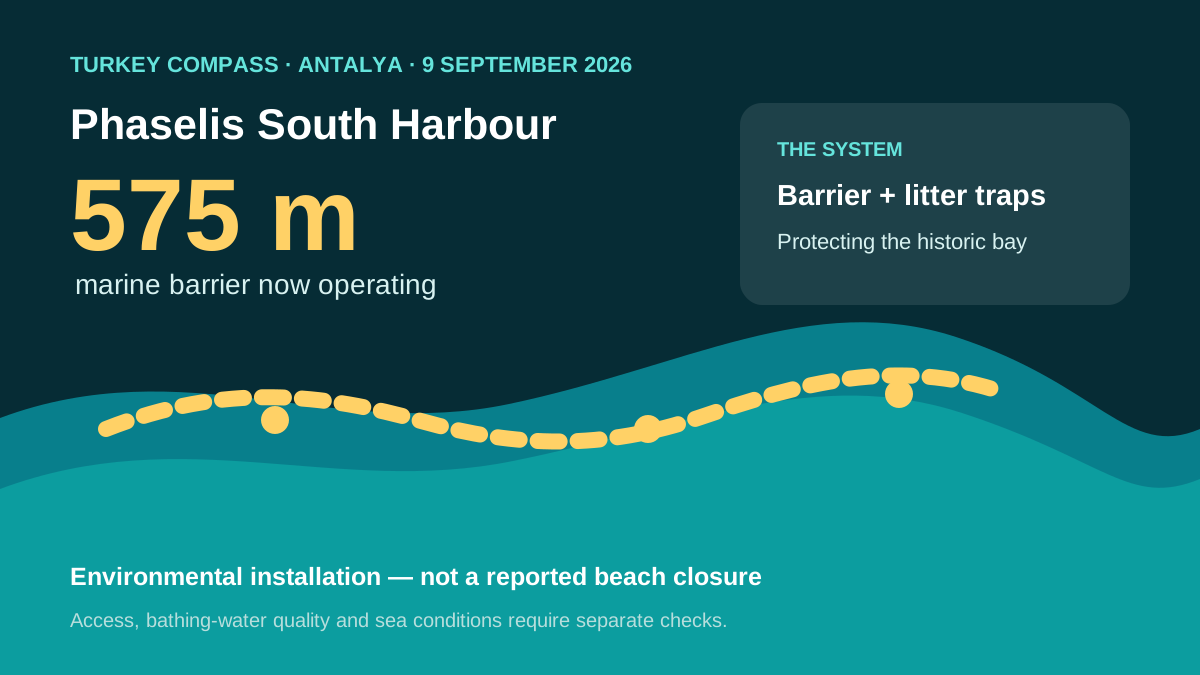
Antalya Governorate announced on 9 September 2026 that 575 metres of marine barrier and litter-trap systems have been put into operation at the South Harbour of Phaselis Ancient City. The measure is intended to protect the historic bay and the Mediterranean from floating waste. For international visitors, the practical point is narrower than some social-media interpretations: the announcement describes an environmental installation and does not report a closure of the archaeological site, a new ticket rule or a swimming ban.
What has been installed at Phaselis
The new official update identifies two parts of the system: a total of 575 metres of marine barrier and litter traps. Their role is to intercept waste before it spreads through the bay or reaches the shoreline. The statement does not provide a technical map, installation depth or a public operating schedule, so visitors and boat operators should not infer a navigation boundary beyond the marked equipment on site.
Why the South Harbour was selected
Phaselis combines an archaeological landscape with a heavily visited Mediterranean cove. Antalya's wider coastal programme began after plastic fragments and other floating waste were observed along several beaches. In earlier official briefings, the governorate said it was testing barriers at river mouths and vulnerable shores, adding sea-cleaning boats and expanding litter-trap capacity. The Phaselis installation is therefore a concrete delivery within that broader programme, not a newly announced national restriction.
The notice does not close Phaselis to visitors
The governorate's announcement does not state that the ancient city, South Harbour beach or swimming area has been closed. It also does not announce a new entrance fee, opening hour or reservation requirement. Access can still change because of weather, conservation work, crowd management or a separate local safety decision. Anyone travelling specifically to swim or arrive by boat should check the live notice from the site authority and follow buoys, staff instructions and coastguard rules.
A barrier is not a water-quality certificate
Waste interception and bathing-water quality are different issues. A barrier can collect visible floating material, but it does not by itself prove that the water is free of microplastics, bacteria or pollutants. Official bathing restrictions, laboratory monitoring and environmental inspections must be checked separately. Visitors should avoid touching collected debris and should report damaged equipment or concentrated waste to site personnel rather than moving it themselves.
What this changes for a day trip
The installation adds visible environmental infrastructure to a sensitive heritage bay, but it does not replace normal trip planning. Check current museum hours, transport, heat and wind conditions, and whether the route you intend to use is open. Keep clear of barriers and litter traps in the water. The safest reading of the announcement is simple: protection equipment is active; unrestricted access, water quality and sea conditions remain separate questions.