Turkey has changed the conditions for Treasury interest-supported investment and operating loans issued through Halkbank to registered artisans and craftspeople. Under Presidential Decision 11648, effective from 27 August 2026, a tax or social-security premium debt that has not been restructured or placed on an instalment plan will no longer automatically shut every otherwise eligible applicant out of the programme. The trade-off is a lower Treasury interest discount than the standard category receives. This is a targeted credit-access rule for the Turkish legal status of esnaf ve sanatkâr; it is not a debt amnesty, a grant or a general loan right for every company and foreign founder in Turkey.
What changed for an applicant with public debt
Previously, some artisans could not meet the programme's debt-free condition when outstanding tax or SGK premium liabilities had neither been restructured nor put on an instalment plan. The amendment creates a separate route instead of a complete exclusion. An eligible applicant may be considered under reduced Treasury interest-discount rates. The tax and SGK liabilities remain payable, and the decision does not say that they are erased, postponed or converted into the new loan. A business that already uses restructuring or instalment arrangements should have its position checked separately rather than assuming the new exception is automatically better.
Three discount rates, not one universal loan price
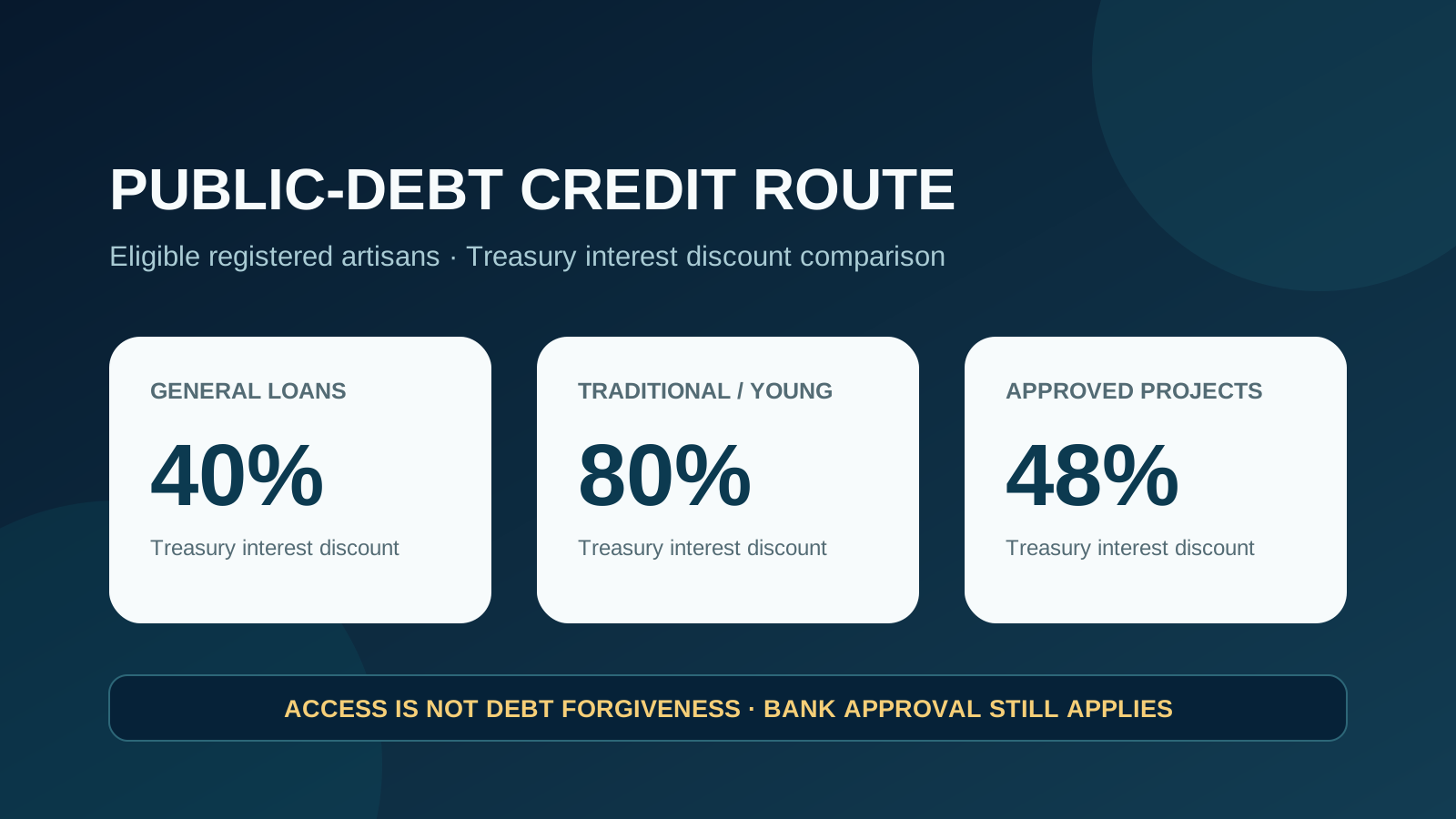
For general investment and operating loans, the Treasury interest discount falls from the standard 50% to 40% for this debt category; the ministry calculates an annual financing cost of 24% using current commercial rates. For disappearing traditional professions, master entrepreneurs and young entrepreneurs, the discount is 80% instead of 100%, giving a current annual cost of 8%. Participants in approved projects and technical-support programmes receive 48% instead of 60%, corresponding to 20.8% at current rates. These cost figures are a 28 August snapshot based on the ministry's stated current rate, not a promise that every future contract will carry an unchanged rate.
Who should not read this as an automatic entitlement
The measure refers specifically to artisans and craftspeople using the Treasury-supported Halkbank scheme. A limited company, ordinary sole trader or foreign-owned business does not qualify merely because it is small or owes tax. The applicant must first have the legal registration and programme status required for the relevant artisan category. Young or master entrepreneur treatment, a disappearing-profession classification and participation in an approved support project each require their own evidence. Citizenship or residence status alone neither creates nor removes eligibility; the registered business and programme conditions control.
Bank approval and credit risk still remain
A Treasury interest discount reduces the financing cost; it does not compel Halkbank to lend. The bank may still assess repayment capacity, records, guarantees, collateral and applicable credit rules. The ministry's announcement does not publish a new universal credit limit, maturity, collateral waiver or instant application promise. Applicants should request a written calculation showing the principal, nominal rate, Treasury-supported rate, fees, insurance, repayment schedule and total cost. A promotional percentage without these items is not enough to compare offers.
Checklist for an international owner in Turkey
First confirm whether the operating person or entity is actually registered in the relevant esnaf ve sanatkâr system and which loan category applies. Obtain current tax and SGK debt statements and identify whether any liability is already restructured or instalment-based. Ask Halkbank or the competent artisan credit cooperative to confirm the documentary route in writing. Compare the supported loan with ordinary commercial finance on the same term and collateral basis. Finally, budget for the public debt separately: the new rule preserves access to consideration, but it does not turn overdue liabilities into free working capital.
Turkey Compass reading of the decision
The practical improvement is that unresolved tax or SGK debt is no longer an absolute barrier for every otherwise eligible artisan. The price of that access is a smaller public interest subsidy. The correct headline is therefore 'a conditional credit route opened', not 'debtors receive cheap cash'. Before signing, applicants should verify their legal category, the current bank rate, all fees and the treatment of their public liabilities with the competent institutions. This article explains the official rule and is not an individual credit or tax opinion.