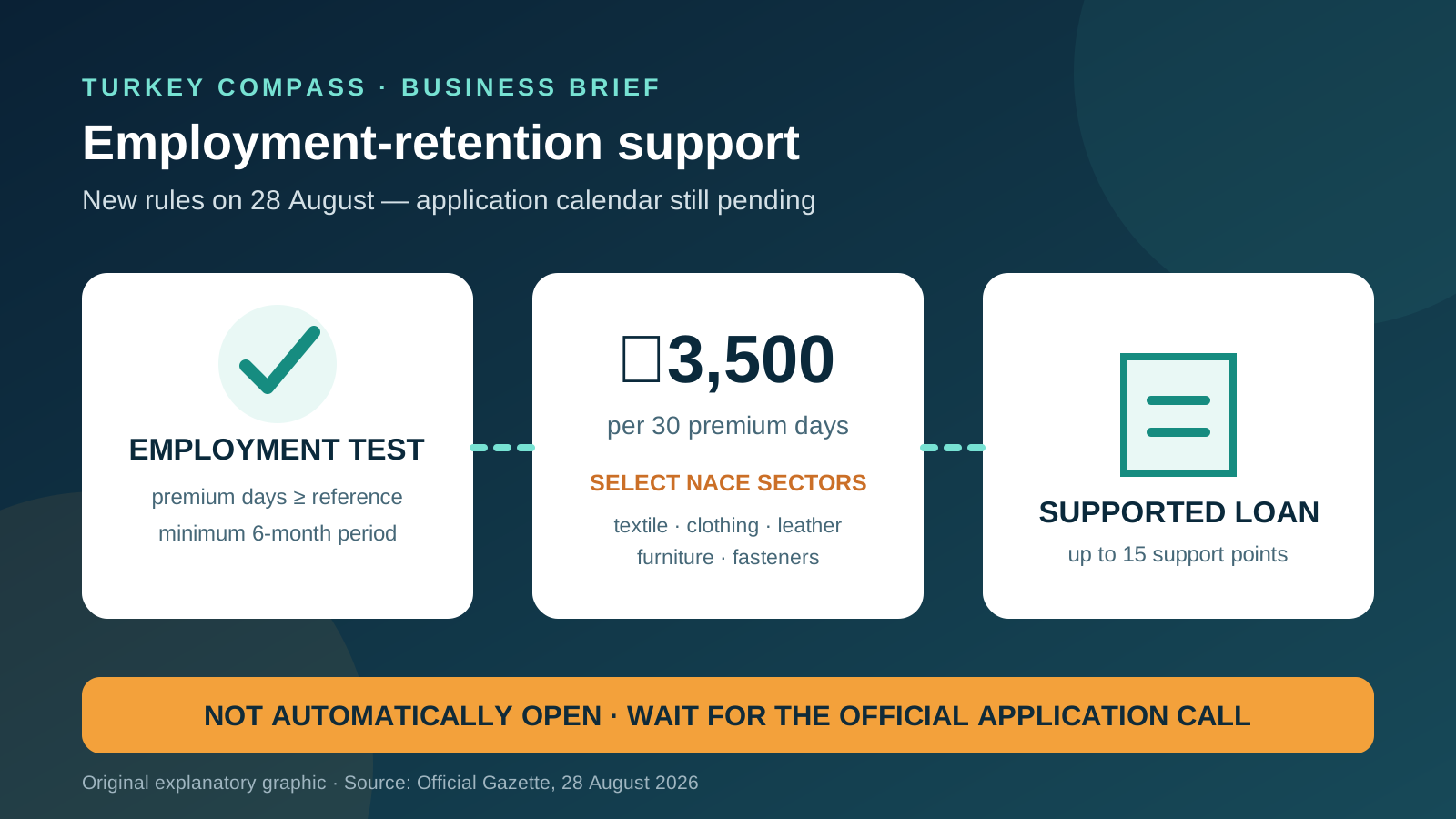
Turkey amended the operating regulation for its Employment Retention Support Programme on 28 August 2026, changing how retained employment, performance grants and supported loans may be calculated. The decision is relevant to international manufacturers with Turkish workplaces because it replaces several fixed dates and values with reference and protection periods that the authorities can announce for each round. It also creates a broader credit formula, including special treatment for companies meeting technical criteria and certain investment-incentive certificate holders. The most important caution is procedural: publication of the regulation does not mean that a fresh application window opened automatically. The Labour and Social Security Ministry and KOSGEB must separately announce the calendar and implementation terms.
What the 28 August amendment actually changes
The revised Article 5 says support will run during the statutory period in temporary Article 35 of the Unemployment Insurance Law, while the responsible ministry and KOSGEB will announce application and payment details. Eligibility will be tested against an officially selected reference period and a protection period of at least six months. A workplace preserves employment in a month when its declared premium days equal or exceed the reference-period monthly average. The rules also allow a cumulative average from the start of the protection period to the claim month. This can smooth a weak month, but it does not remove the obligation to document payroll and social-security declarations accurately.
Who can receive the TRY 3,500 performance support
The performance-support list covers manufacturers registered under NACE divisions 13, 14, 15 and 31: textiles, clothing, leather-related products and furniture. It also expressly includes code 32.99.02 for buttons, press studs, fasteners, zippers and related parts. For eligible registered workplaces that satisfy the employment test, the amount is calculated pro rata at TRY 3,500 for each monthly block of 30 premium days. That is a premium-day formula, not an unconditional TRY 3,500 cash payment for every name on a staff list. The SGK workplace registration and industrial activity code matter, and a zero reference-period average or no relevant declaration excludes a workplace.
The supported-loan formula becomes more flexible
For businesses preserving employment, the regulation allows support for loans within limits tied to employment costs. The base credit amount can equal the reference-period average of total earnings subject to social-security premiums for covered workplaces, multiplied by one sixth of the number of months in the protection period. Companies meeting technical criteria to be set by the ministry may receive twice that calculated amount. The support itself is capped at the value corresponding to as many as 15 support points on a loan used after application, with up to six months without principal repayment and a total maturity of up to 36 months. Bank approval and programme rules still apply.
Investment-incentive holders get a separate route
A qualifying manufacturer with an investment incentive certificate issued under Article 18(5) of Presidential Decision 9903 may use another calculation. The possible loan amount is the additional employment stated in the certificate multiplied by six times the gross minimum wage in force in January of the application year. Payment is conditional, not automatic: the completion visa must be issued by 1 June 2028, and the six months following that visa must reach the premium-day threshold defined in the regulation. Foreign investors should verify the exact certificate basis, expected additional employment, completion-visa timetable and SGK workplace codes before putting the support into a financing model.
Why the application calendar matters
KOSGEB's existing public programme page still describes the earlier 2026 round, including a 30 April 2026 deadline and older fixed calculations. The new regulation deliberately says that application dates, required documents, payment rules, eligible groups, participating banks and credit limits can be announced separately. Therefore a company should not submit financial commitments or assume retroactive eligibility solely because the amendment is in force. The practical next step is to monitor KOSGEB and the Labour and Social Security Ministry for a new call, then compare its reference period and protection period with the company's payroll records. Any bank offer should also be checked against the official protocol.
A due-diligence checklist for foreign-owned factories
Confirm the legal entity and SGK workplace numbers that will apply, the registered NACE activity, the reference-period premium-day average and whether the business has uninterrupted declarations. Separate the performance grant for designated labour-intensive sectors from the credit-support route available under different conditions. Test the base and doubled credit formulas without assuming the technical criteria are already satisfied. Investment-certificate holders should map the additional-employment promise to the completion-visa and six-month payroll tests. Finally, wait for the official application call before treating support as available liquidity. The amendment expands the legal toolkit, but the calendar, operational criteria, bank participation and final eligibility still require later official documentation.