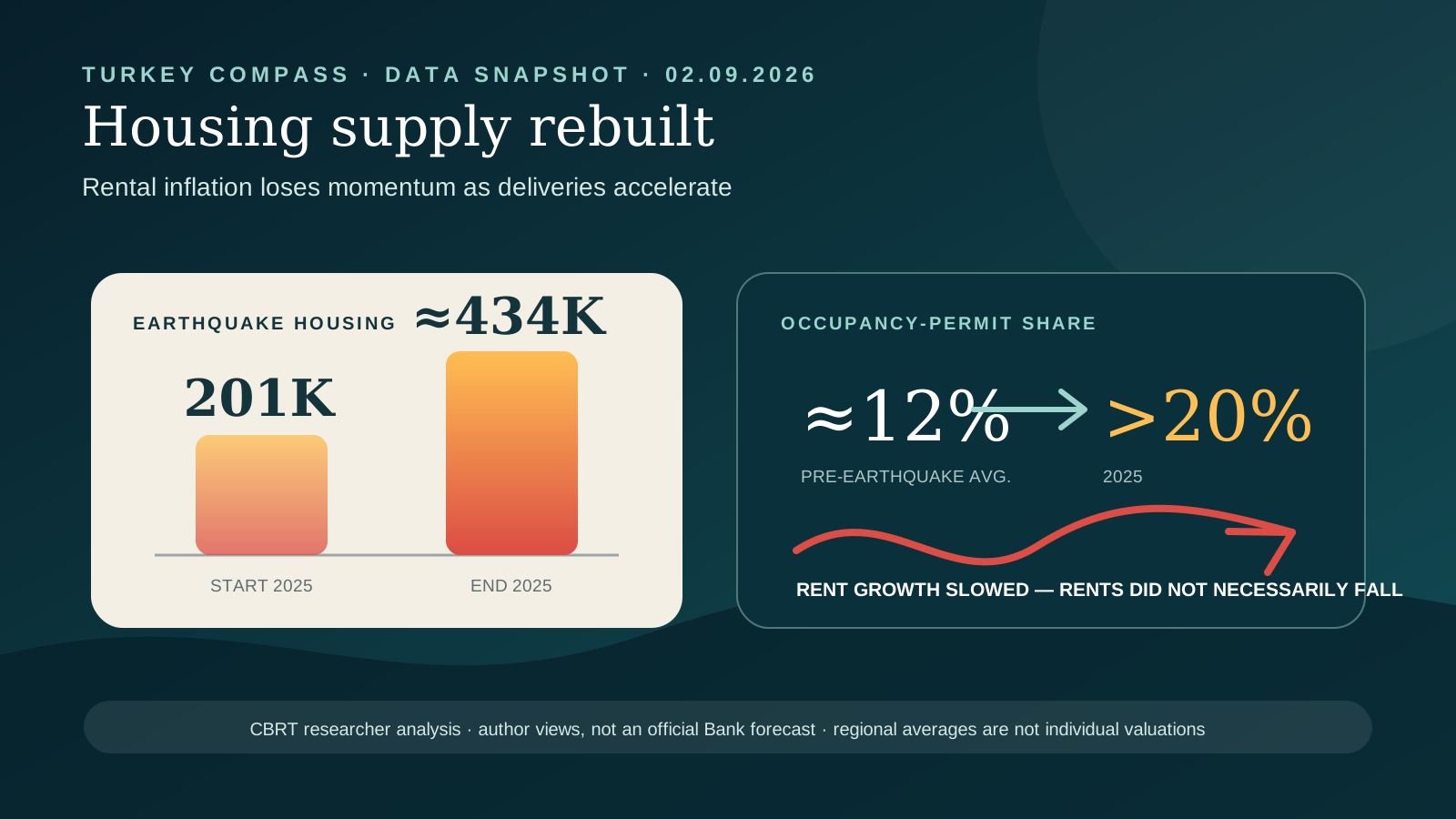
Turkey's rapid rebuilding of housing in the provinces affected by the February 2023 earthquakes is being accompanied by slower rental inflation, according to an analysis published by Central Bank of the Republic of Turkey researchers on 2 September 2026. The authors say the number of earthquake homes built by TOKİ rose from 201,000 at the start of 2025 to approximately 434,000 by year-end, while the region's share of nationwide occupancy permits moved from a pre-earthquake average of about 12% to more than 20% in 2025. The findings matter well beyond the disaster zone, but they do not mean rents have fallen everywhere or that future returns are guaranteed.
What the new analysis finds
The researchers compare housing supply, online rental listings, migration links and construction activity across three groups: earthquake provinces, provinces indirectly affected through migration and the rest of Turkey. Rent inflation was markedly stronger in the earthquake region in 2023 and 2024, then began to lose momentum in 2025 as housing deliveries accelerated. In 2026, the indirectly affected group also recorded clearly lower rent inflation than other provinces. The authors interpret this as evidence that restored supply and gradual return migration may be reducing rental demand pressure.
The scale of the supply recovery
The approximately 434,000 figure refers to earthquake housing built by TOKİ by the end of 2025, not to private homes sold on the open market and not to a new allocation announced on 2 September. Occupancy permits offer a second signal: the earthquake region's share of permits issued across Turkey exceeded 20% in 2025, compared with roughly 12% before the disaster. Both indicators point to a substantial rebuilding effort, but they measure different things and should not be added together.
Slower inflation is not the same as lower rent
A deceleration means asking rents are rising more slowly than before; it does not necessarily mean the lira amount paid by an existing or new tenant has declined. The study uses online asking-rent data for its regional comparison, so actual signed contracts can differ by district, building age, condition and timing. Anyone budgeting for a move should still check current listings, negotiate the contract and calculate deposits, service charges and annual adjustment rules separately.
Why Antalya and other receiving provinces appear in the study
The indirectly affected group comprises Ankara, Antalya, Aydın, Batman, Bursa, Karaman, Kayseri, Konya, Manisa, Mardin, Mersin, Muğla, Niğde, Sivas and Van. These provinces are not described as earthquake provinces. They are grouped because geographic proximity or established migration ties meant post-earthquake population movements had a measurable effect on rental demand. The result is a group-level pattern, not proof that every district in Antalya, Mersin or Muğla is following the same path.
What renters and relocating households can use
The analysis supports a more careful city comparison. A household choosing between Antalya, Mersin, Ankara or another receiving province should track current asking rents, available stock, commuting costs and contract conditions rather than relying on a national rent headline. Gradual reverse migration may ease pressure in some places, but tourism demand, university calendars, new employment and local construction can pull individual neighbourhoods in another direction.
What property investors should not assume
More supply and slower rent inflation can reduce the probability of repeating the exceptional rent growth seen after the disaster. They do not establish that a particular home is overpriced, that sale prices will fall or that every rental yield will weaken. Investors still need district-level vacancy, achievable rent, purchase price, maintenance, tax, financing and exit-liquidity evidence. Foreign-currency returns also depend on the lira and cannot be inferred from a rent-inflation chart.
The evidence has important limits
The 2 September publication is an analytical blog post written by CBRT researchers; the site expressly says the views belong to the authors and do not necessarily represent the Bank's official position. The interpretation draws on a July 2026 CBRT working paper, administrative housing indicators and online listings. It identifies a persuasive supply-and-migration mechanism, but family return decisions occur with delays and the future path remains conditional on construction, migration and local demand.
Turkey Compass fact check
Supported: the researchers report about 434,000 earthquake homes by the end of 2025, an earthquake-region share of occupancy permits above 20%, and slower rent inflation as supply recovered. Unsupported: rents have fallen across Turkey, Antalya rents are guaranteed to decline, or the Central Bank has issued a formal housing-price forecast. The publication is research analysis, and its regional averages must not be presented as a valuation for an individual property.