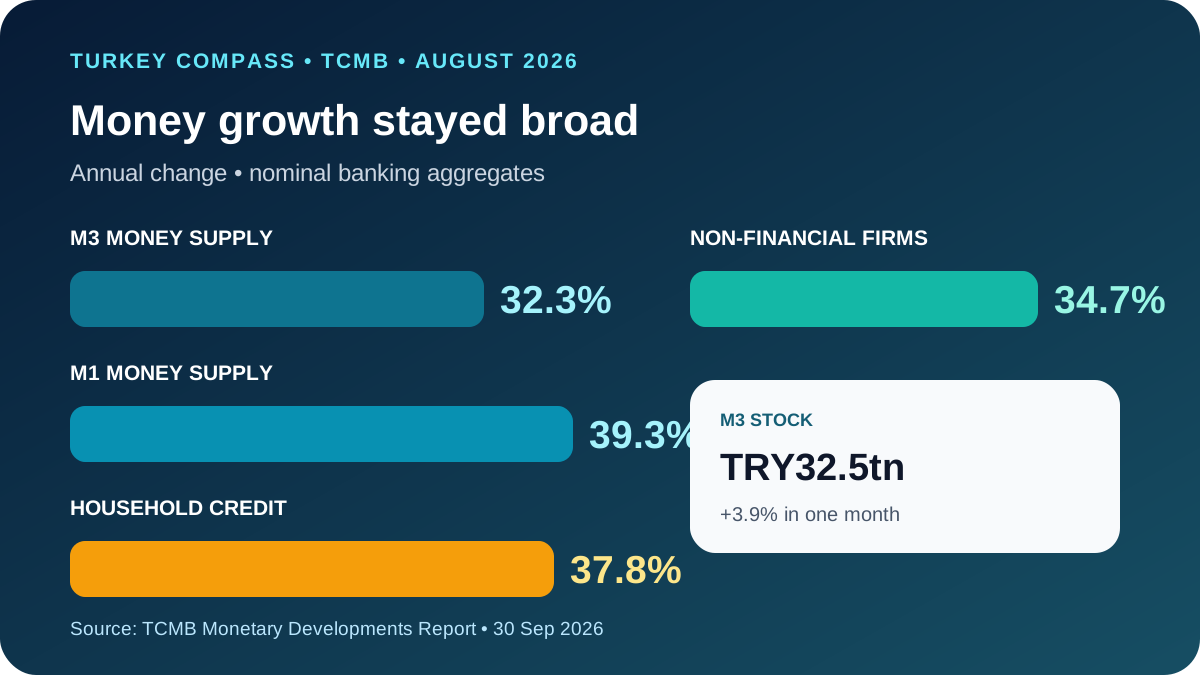
Turkey's broad money supply M3 expanded 32.3% in the year to August 2026, accelerating by 1.8 percentage points from July, according to the Central Bank's monthly report published on 30 September. M3 reached TRY32.499 trillion after growing 3.9% in one month. Household credit grew 37.8% annually, but its pace slowed by 3.8 percentage points, while lending to non-financial companies increased 34.7%. These are nominal banking-system aggregates, not inflation-adjusted household income or a forecast for the lira.
M3 rose by TRY1.23 trillion in August
The broad aggregate increased by TRY1.229 trillion from July. Time deposits in lira added TRY458 billion and foreign-currency demand deposits added TRY392 billion, making them the largest reported monthly contributors. M1, the narrowest money measure, increased by TRY482 billion and its annual growth rate rose to 39.3%.
Time deposits drove the annual increase
Time deposits contributed 17.6 percentage points to M3's 32.3% annual growth. Demand deposits contributed 10.5 points and money-market funds 2.2 points. This composition helps explain where the expansion sat inside the banking system, but it does not show how much an individual household saved or whether a depositor gained after inflation and tax.
Household credit growth cooled but remained high
Annual household lending growth declined 3.8 percentage points to 37.8%. Credit to non-financial companies rose 34.7%, 0.3 point faster than in the previous month. A lower growth rate does not mean the outstanding stock contracted: it means credit was still expanding, but household lending increased more slowly than a year earlier.
What the figures mean for foreign residents and investors
The data point to continued expansion in deposits, money funds and credit. Foreign residents comparing lira deposits, foreign-currency accounts or financing should use current bank terms, withholding tax, currency risk and deposit-insurance rules rather than the M3 rate. Property buyers should not infer easier mortgage access or higher home prices from money growth alone; bank eligibility, loan-to-value limits, income evidence and the separate house-price index remain decisive.
Three limits to keep in mind
First, the report uses nominal values and does not remove consumer inflation. Second, foreign-currency deposits are converted into lira for aggregation, so exchange-rate movements can change their lira value. Third, the figures cover the monetary sector as a whole and cannot establish the cost of a specific loan, deposit return or future policy decision.