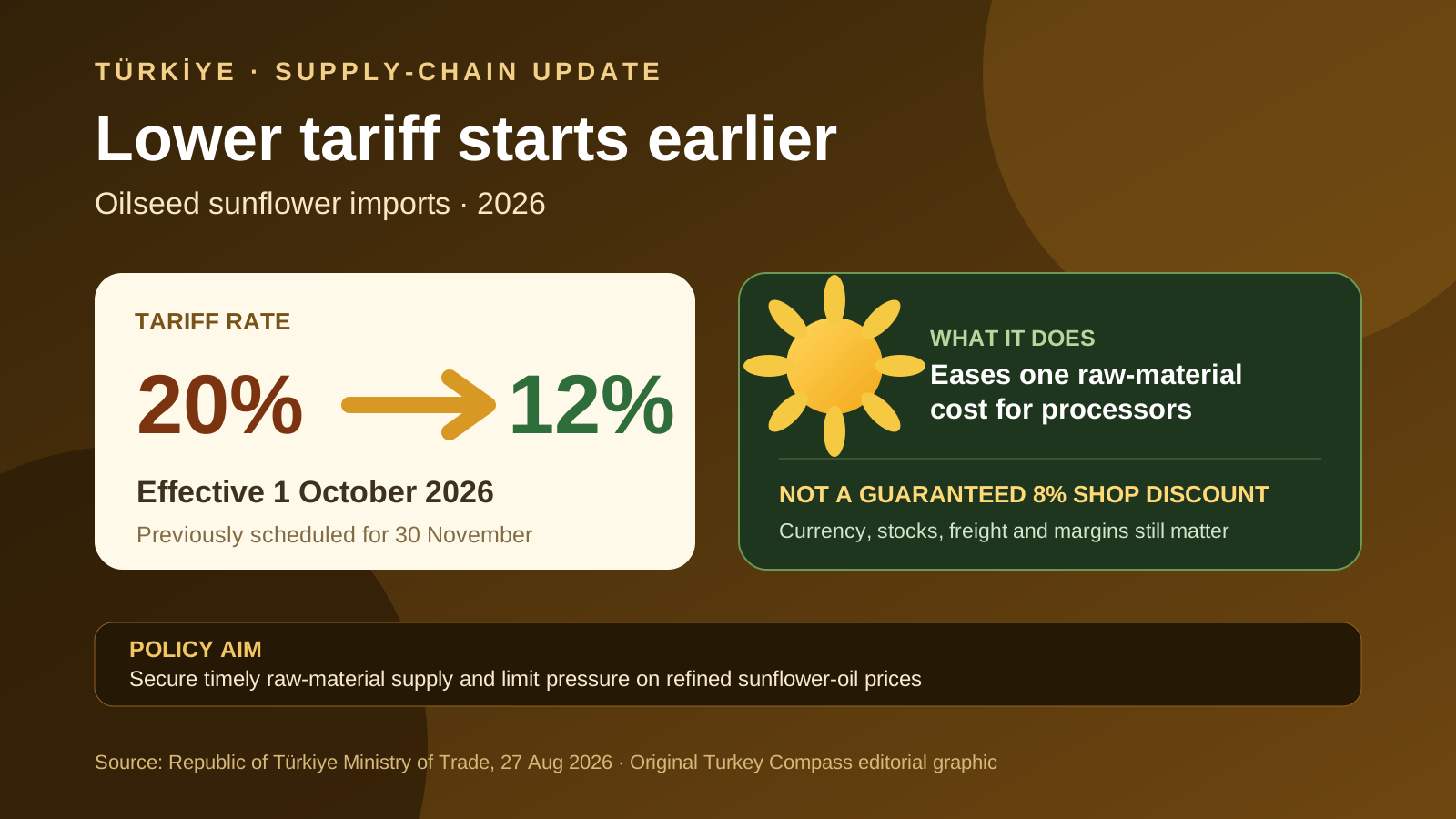
Turkey will bring forward the lower import-tariff period for oilseed sunflower seeds in 2026. The Ministry of Trade announced on 27 August that the rate will fall from 20% to 12% on 1 October rather than 30 November. The ministry says the temporary calendar change is designed to help cooking-oil manufacturers obtain sufficient raw material at a more suitable cost after risks linked to Black Sea developments and drought in Europe. For households and food businesses, the decision is a supply-chain intervention—not a promise that bottled sunflower oil will become 8% cheaper on 1 October.
What exactly changes on 1 October
Under the normal tariff calendar described by the ministry, oilseed sunflower seed imports face a 20% customs duty during the domestic harvest period and a 12% rate between 30 November and 15 June. For 2026 only, the authorities agreed to start the 12% period on 1 October. The practical change is therefore two months of earlier access to the lower rate. The announcement concerns the raw seed used by refiners, not a universal tax cut on every bottle of sunflower oil or every food product containing vegetable oil.
Why the government changed the timetable
The Ministry of Trade cited possible supply and price risks arising from developments around the Black Sea and drought affecting Europe. Turkey's edible-oil processors need timely access to enough seed, while the harvest-period tariff also serves to protect domestic producers. Moving the date seeks to balance those interests: preserve the higher rate through part of the harvest, then ease imports sooner if external supply risks threaten processing costs. The statement does not publish an import quota, a guaranteed volume or a target retail price.
An eight-point tariff reduction is not an 8% shelf-price cut
The customs rate moves by eight percentage points, from 20% to 12%. That is not the same as an 8% reduction in the final price. The duty applies to the customs value of the imported seed, while a bottle also reflects crushing and refining, packaging, transport, energy, finance, wholesale and retail margins, taxes, exchange rates and stocks already purchased. The price effect depends on how much seed is imported, the landed cost, the lira exchange rate and whether processors pass savings through the chain.
When consumers might see an effect
A policy change begins at the border and must work through inventories and production contracts before reaching shops. Manufacturers may already hold seed bought under earlier terms, and retailers may have bottled oil purchased at previous wholesale prices. A stable or lower world commodity price could strengthen the effect; a weaker lira, freight disruption or higher energy and packaging costs could offset it. Consumers should therefore compare actual unit prices after October rather than treating the tariff date as a guaranteed discount day.
What restaurants, hotels and food manufacturers should check
Food businesses should ask suppliers when the new tariff is reflected in quotations, which oil products are affected and how long prices are valid. A contract indexed to commodity or foreign-exchange benchmarks may react differently from a fixed-price local supply agreement. Businesses should separate raw sunflower oil, refined oil and bottled retail formats, because each has different processing and packaging costs. The decision can reduce one input pressure, but it does not remove the need for stock planning, multiple suppliers and exchange-rate scenarios.
What the announcement does not change
The ministry did not announce a consumer subsidy, a retail price ceiling or a mandatory price reduction. It also did not say that the 12% rate will begin permanently on 1 October in future years; the wording presents the change for this year in response to current risks. Nor does the statement establish that a shortage has already occurred. It describes a preventive measure intended to support timely and adequate raw-material supply and to reduce the risk of an adverse effect on refined sunflower-oil prices.
Turkey Compass assessment
The accurate conclusion is that Turkey is lowering an upstream import cost earlier to protect supply and limit future price pressure. It is reasonable to watch wholesale and retail sunflower-oil prices after October, but it would be misleading to promise a fixed reduction from the tariff alone. Households should track shelf prices per litre; businesses should request updated supplier terms. The ministry's next announcements and actual import, exchange-rate and commodity-price data will determine how much of the policy reaches consumers.