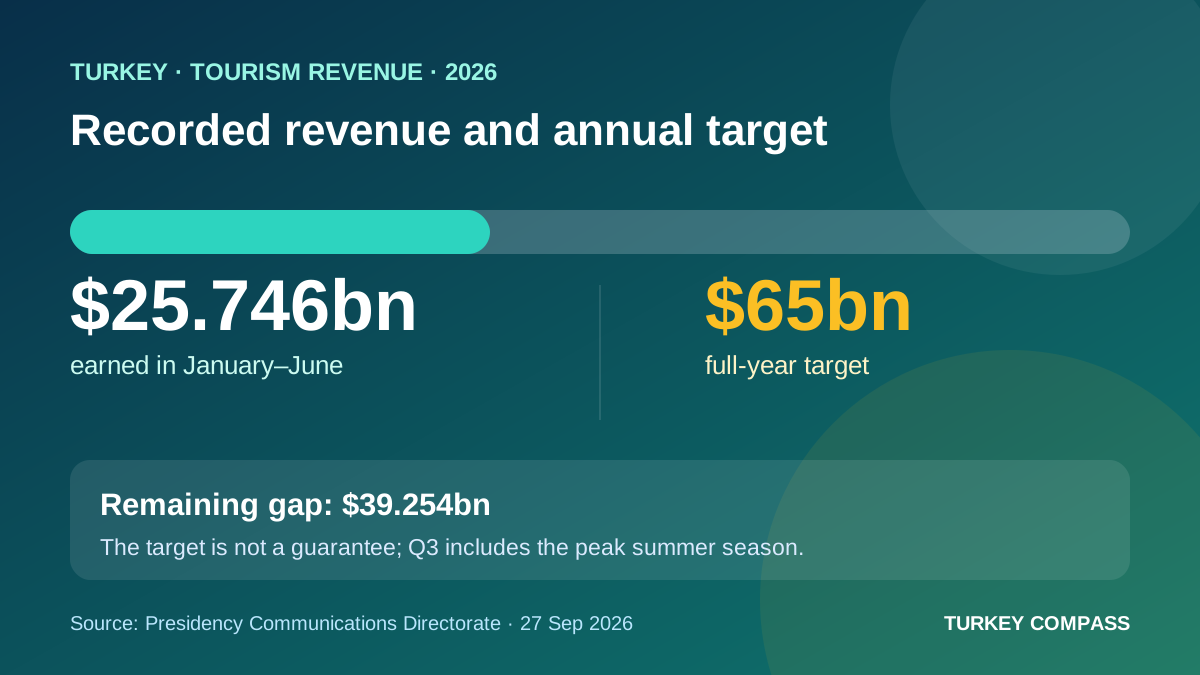
Turkey earned $25.746 billion from tourism in the first six months of 2026 and is targeting $65 billion for the full year, President Recep Tayyip Erdoğan said in a World Tourism Day message on 27 September. The two figures are not equivalent: the first is recorded revenue, while the second is a policy target that can only be assessed after the full-year data are published.
The arithmetic behind the target
Subtracting the first-half result from the target leaves $39.254 billion to be generated in the second half. That is roughly 60.4% of the annual target. It is also about 52.5% more than the first-half total, but the comparison is highly seasonal because July–September contains the main summer travel period.
Why the target is not a forecast guarantee
The official message states the government's objective; it does not provide a probability or guarantee that $65 billion will be reached. Visitor numbers, nightly spending, length of stay, exchange rates, package-tour income and geopolitical or transport disruptions can all change the final result.
What international investors should watch
Tourism revenue is a national gross-flow measure, not a profit figure for hotels, airlines or property. Investors should compare occupancy, room rates, operating costs, debt, local seasonality and the share of demand coming from each source market before applying the headline target to a company or destination.
A practical reading for travellers
A higher national revenue total does not by itself mean every Turkish holiday becomes more expensive. Check flights, accommodation, transfers, food and card-conversion costs for the exact dates and city. The next decisive official checkpoint will be third-quarter tourism data, which covers the peak season.
Turkish Statistical Institute (TÜİK) — Tourism Statistics, Q2 2026, bulletin 58143 →