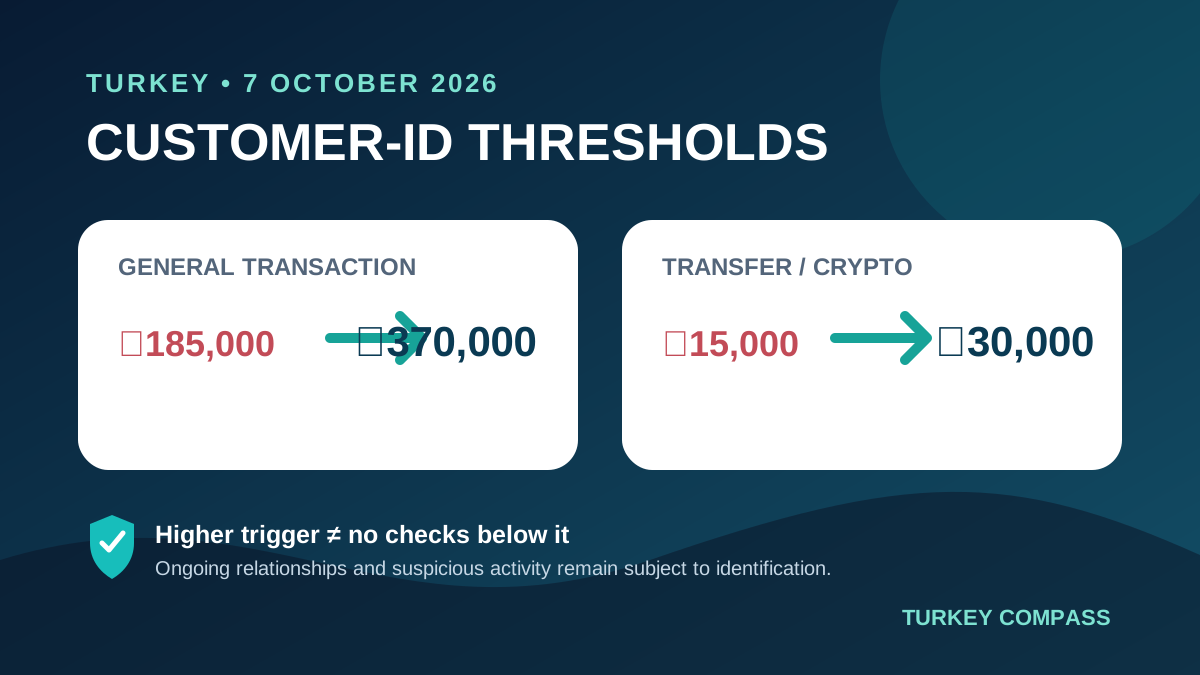
Türkiye changed several monetary thresholds in its anti-money-laundering customer-identification rules with immediate effect on 7 October 2026. For ordinary transactions, the general trigger in Article 5 rises from TRY 185,000 to TRY 370,000; the special TRY 15,000 figures covering crypto-asset providers and electronic or crypto transfers rise to TRY 30,000. Financial institutions may also omit a signature specimen for a subsequent transaction when the customer is verified through specified internet, mobile or one-time-password channels. The change does not mean that banks, payment companies or crypto platforms must ignore identity below those amounts.
Which figures changed
Decision No. 11845 replaces TRY 185,000 with TRY 370,000 in Article 5(1)(b). In the same provision, the TRY 15,000 threshold for crypto-asset service providers becomes TRY 30,000. Article 5(1)(c), covering electronic transfers and crypto-asset transfers, also moves from TRY 15,000 to TRY 30,000. The separate information thresholds in Articles 24 and 24/A for electronic-transfer and crypto-transfer messages are raised to TRY 30,000 as well.
Why the numbers are not a blanket no-ID allowance
The regulation still requires identification regardless of amount when a continuing business relationship is opened, when a suspicious transaction must be reported, or when there is doubt about previously obtained customer information. An institution may also apply stricter controls under its own risk procedures. A resident opening an account, an investor moving funds through a newly established relationship or a customer whose records need updating should therefore still expect document requests even below the new figures.
What changes in a bank's digital flow
For subsequent transactions, a financial institution may omit the signature specimen when verification is completed through its internet or mobile service channels, or with a one-time SMS code sent to the customer's registered and previously verified mobile number. The method must match the transaction's risk, provide adequate assurance that the person is the identified customer and include safeguards against an unauthorised person acting in the customer's name. This is a conditional option for institutions, not a customer's automatic right to a document-free transaction.
Practical point for international residents and investors
Before a large property payment, company transfer or investment remittance, ask the receiving bank which documents it needs for source of funds, purpose of payment and beneficiary details. The TRY 370,000 figure is an identification trigger in the AML framework; it is not a property-purchase limit, a tax exemption or a guarantee that the payment will clear. For cross-border transfers, the sender and recipient banks may also request information under their own compliance rules and foreign law.
Crypto and electronic transfers
The new TRY 30,000 figure appears in both the identity rule and the transfer-message provisions. It should not be read as permission to split one transfer into smaller amounts: Article 5 expressly covers linked transactions, while institutions monitor transaction patterns and suspicious activity independently of the threshold. Use the name and account or wallet details exactly as held by the provider, and keep a record of the transaction's lawful source and purpose.
Effective date and what to do now
All seven articles of the amendment took effect on publication, 7 October 2026. Customers do not need to submit a general application because the operational changes are for regulated institutions to implement. If a provider quotes an older figure, ask it to check Official Gazette No. 33393 and Decision No. 11845. For a rejected or delayed transaction, request the institution's written explanation rather than assuming the threshold alone determines the outcome.
MASAK — official frequently asked questions on customer identification duties →
Grand National Assembly of Türkiye — Law No. 5549, legal basis for customer identification →