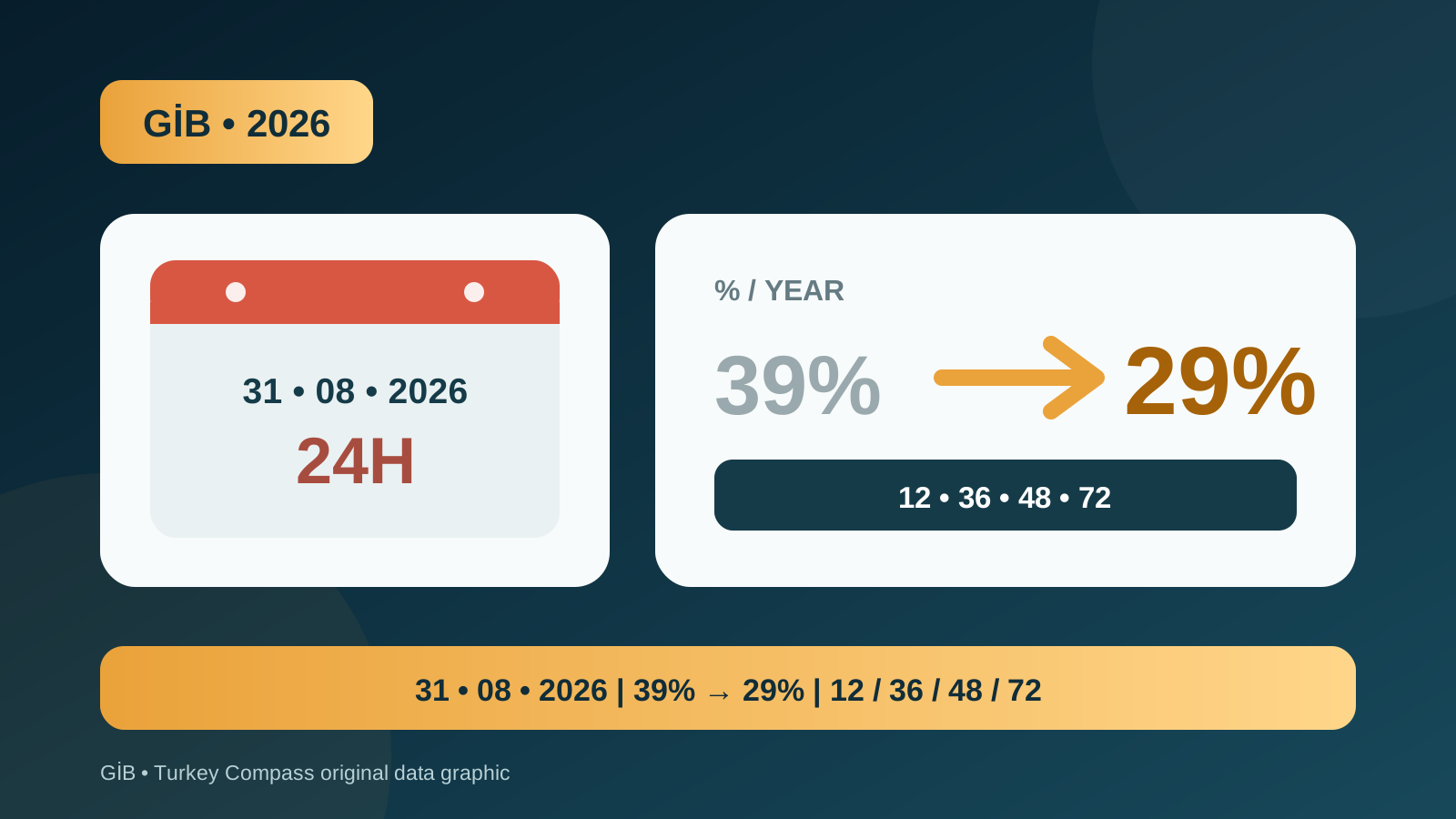
Turkey's Revenue Administration says 31 August 2026 is the final application date for a temporary, lower-interest route to defer qualifying debts collected by tax offices. Approved debts carry annual deferment interest of 29% rather than the current 39%, with the first monthly instalment due in September 2026. The benefit can matter to international founders, property owners and residents who are Turkish taxpayers, but it is not a tax amnesty: the principal remains payable, late additions are calculated up to the application date and approval depends on the statutory conditions.
The deadline and the eligible time window
The programme covers public receivables that had fallen due by 5 June 2026, remained unpaid when the communiqué was published on 16 June and are collected by tax offices attached to the Ministry of Treasury and Finance. An application must be made by 31 August, inclusive. A debt that arose later does not enter merely because an application is filed today. Taxpayers with debts at more than one tax office must apply separately to each office.
29% interest is a deferral rate, not a discount on principal
The official comparison is annual deferment interest of 29% instead of 39%. It does not cancel the tax debt or promise a 10-point reduction in the principal. Late-payment additions are first calculated to the deferment-request date and the payment plan is then established. Approval, instalment count and any security requirement must be confirmed in the official decision; an online application receipt alone is not an approved schedule.
Which liabilities are excluded
Excise tax (ÖTV), provisional tax to be credited against 2026 income or corporation tax, and the associated tax-loss penalties, late interest and late charges are outside the scheme. Stamp tax assessed on the relevant returns and its late charges are also excluded. By contrast, qualifying VAT and banking and insurance transaction tax debts may be deferred, but normally in 12 equal monthly instalments rather than the longer liquidity-based periods.
How 12, 36, 48 or 72 instalments are determined
For active balance-sheet or operating-account taxpayers, non-special-category debts may be spread across 36, 48 or 72 equal monthly instalments according to the official liquidity ratio. Other debtors generally receive 48 instalments. VAT and banking and insurance transaction tax liabilities are limited to 12 instalments. Certain municipalities and related public entities can use 72 instalments. These are ceilings under the communiqué, not a right to choose the longest period without a financial assessment.
Security and the all-debts rule
No security is taken for qualifying public receivables of TRY 10 million or less. Above TRY 10 million, security is required for half of the amount exceeding that threshold. The applicant must request deferment for all qualifying debts held by the relevant tax office, not select only a convenient portion. At least 10% of the deferred principal must be paid before the debt can be omitted from a tax-debt status certificate.
What an international taxpayer should do today
Check the debt ledger and eligibility with a licensed Turkish accountant, then apply through the Revenue Administration, Digital Tax Office or e-Devlet, or use an authorised written route to the tax office. Keep the submission record and do not assume residence or citizenship changes the rules: eligibility follows the Turkish tax liability and taxpayer file. If a payment, property transfer or company transaction depends on a clean debt certificate, confirm the effect of the approved plan in writing before signing.
Turkey Compass assessment
The real advantage is more time at a lower deferment-interest rate, potentially up to 72 months for borrowers whose liquidity test supports it. The limits are equally important: this is not blanket restructuring, not debt forgiveness and not a route for excluded taxes or later liabilities. Because the deadline is today, the prudent action is to verify and submit through an official channel early enough to retain proof, then wait for the tax office's formal plan rather than relying on an advertisement or intermediary.